Honest Folk Review (2026): Is this personal AI assistant worth it?

Folk is a personal AI assistant that lives inside your text messages, on iMessage, Telegram, WhatsApp, and Discord, and the whole pitch is that you already have a favorite way to ask for help: texting someone. Instead of opening another app, you message Folk the way you'd message a friend, and it checks in on your gym days, cancels subscriptions you forgot about, tracks flights, and remembers details about your life.
Quick disambiguation before we go further: there's a completely unrelated Paris-based CRM company that also goes by "folk," at folk.app, so if you land on a review calling it a sales tool, you're reading about a different product.
The real question is whether a bot built for gym nagging and subscription hunting can carry the weight of an actual busy week, once work, notes, and a full inbox get added to the mix.
Key Takeaways
- Folk is a texting-based AI (iMessage, Telegram, WhatsApp, Discord) built for personal life admin like habits, gym accountability, subscriptions, and reminders, not office work.
- Setup is genuinely fast: scan a QR code, text back, and you're running in under a minute, with no app download.
- The free tier is real (20 messages a day, forever), but the jump to the $100/month Max plan is steep for how narrow the feature set stays.
- At about three months old, Folk has almost no independent review history on G2, Capterra, or Trustpilot yet, so its bigger claims are still mostly unproven at scale.
- If your mental load stretches beyond habits and subscriptions into notes, email, and a real calendar, a work-focused AI assistant like Saner.AI covers ground Folk was never built for.
Folk At a Glance
| Category | Score | Why |
|---|---|---|
| Ease of setup | 9/10 | QR code, no app to install, running in minutes |
| Feature depth | 5/10 | Deliberately narrow, personal-life scope only |
| Memory & personalization | 6.5/10 | Ambitious knowledge-graph design, still being tested in public |
| Pricing value | 6.5/10 | Generous free tier, but a steep top plan |
| Privacy & trust | 6/10 | Transparent FAQ, but a young company handling bank-linked data |
| Reliability & track record | 4/10 | Three months old, no G2/Capterra/Trustpilot history yet |
| Customer support | 5/10 | Same-day human support is a Max-only perk |
| Overall score | 6/10 | A promising idea running ahead of a proven product |
What Is Folk?
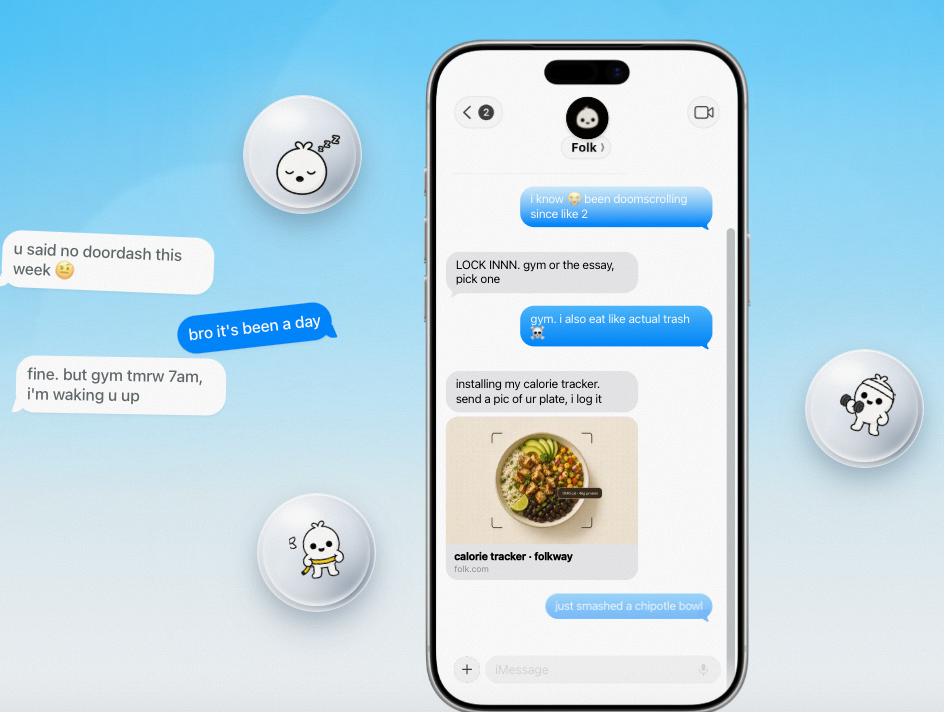
Folk describes itself as "the friend in your texts that keeps you on track." There's no dashboard to log into and no app to download. You add Folk as a contact on iMessage, Telegram, WhatsApp, or Discord, and everything happens inside that thread. Under the hood, it runs on what the team calls its own cloud computer, meaning it can browse the web, book things, and take action rather than just answering questions.
The core features stack up like this:
- Habit and accountability check-ins (gym reminders, study lock-ins, streaks)
- Money-back engine that hunts down forgotten subscriptions and double charges, a memory system built as a knowledge graph rather than a simple chat log
- "Folkways," a marketplace of mini bots built by Folk's own team and outside creators for narrow jobs like calorie tracking or reading your daily Bible verse.
It also does the basics you'd expect from a personal assistant, like tracking flights and drafting texts on your behalf.
Folk Features Breakdown
Habit and accountability check-ins
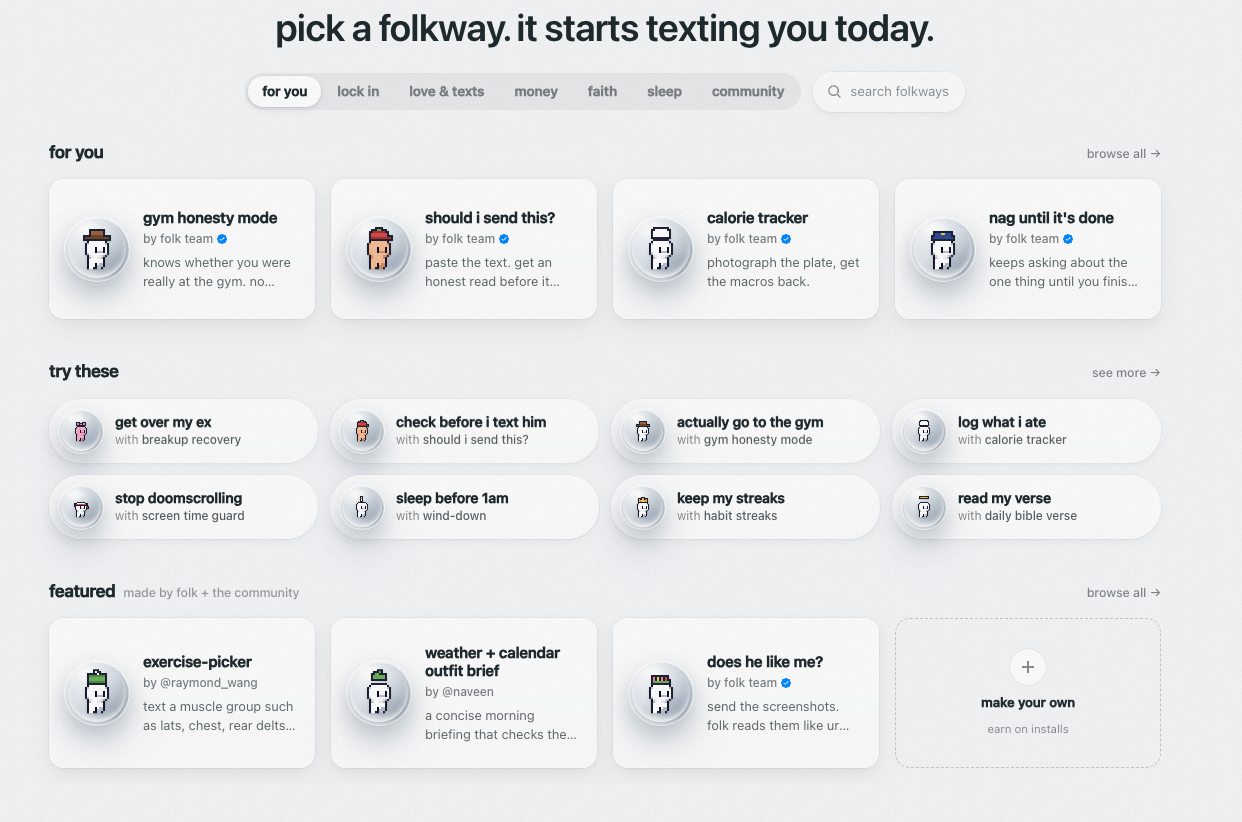
This is Folk's most distinctive corner. You tell it what you're trying to stick to, like a 7am gym session or a study sprint before a deadline, and it texts you first instead of waiting to be asked.
One tester described getting genuinely useful check-ins ahead of things he needed to prepare for, calling the experience "really easy to use" and "definitely worth checking out" – reviews.
Money back
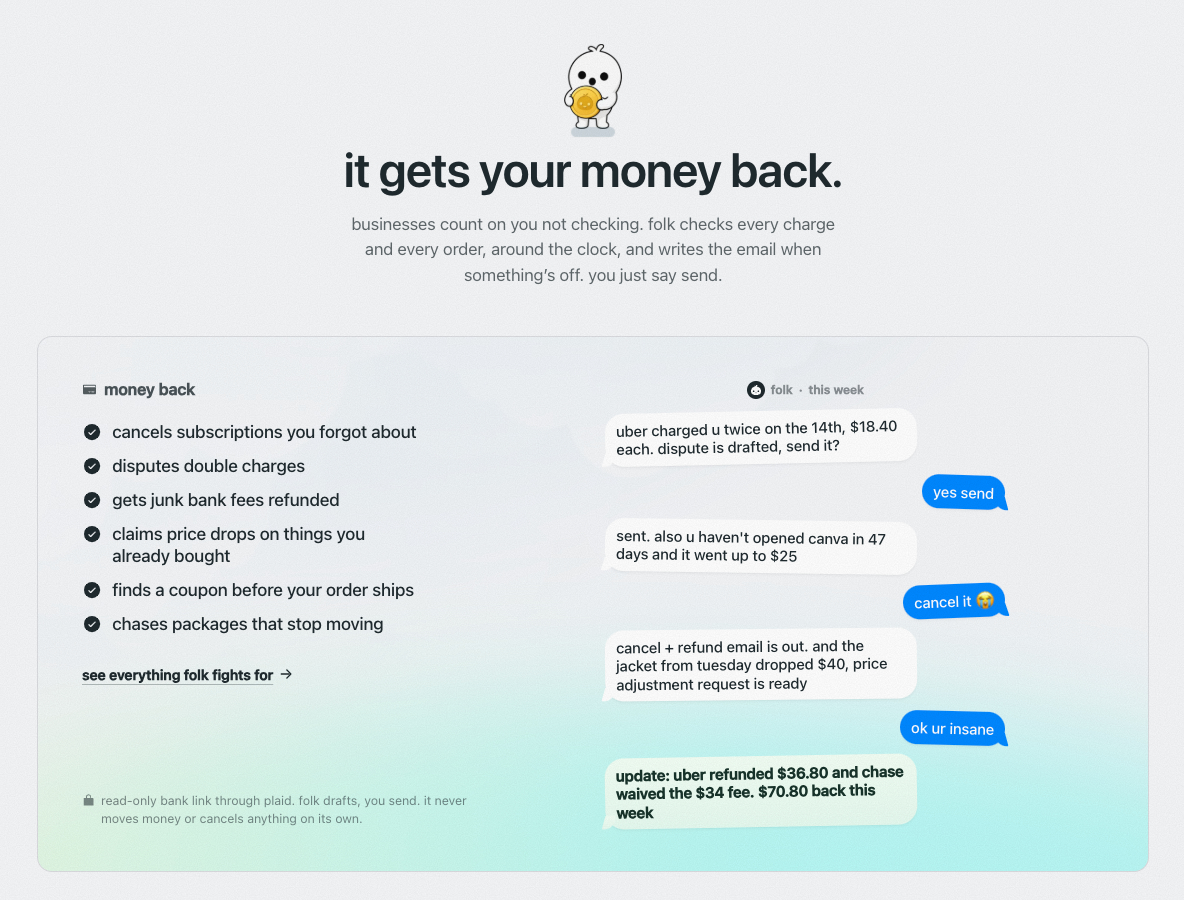
Folk links to your bank account (read-only, through Plaid) and scans for subscriptions you've stopped using, price hikes, double charges, and junk fees, then drafts the email or dispute for you to send with one tap.
It's one of the few AI assistants actually going after this, and it's a smart use case since most people genuinely don't check their statements closely enough to catch this stuff themselves.
Memory and personalization
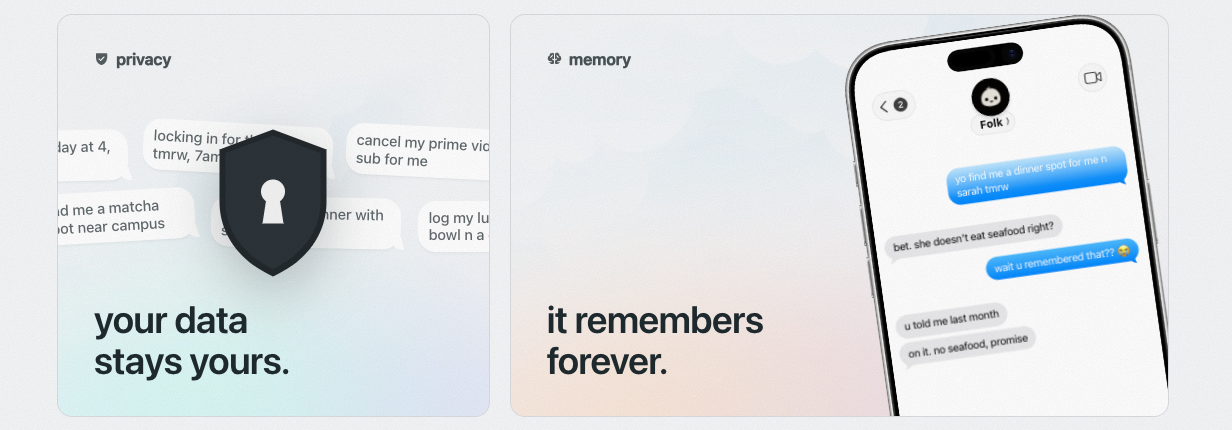
Folk stores what it learns about you as a knowledge graph, essentially a web of facts and connections that grows over time, rather than one long context file it has to re-read every session. The company is upfront that it doesn't fine-tune on your conversations. Still, this is the part of Folk that draws the most scrutiny from its own early community.
One commenter on its launch pushed back on the "gets smarter with every conversation" framing, arguing that the real issue with consumer AI memory is "mostly an undo problem" – reviews
Meaning it's less about how much a bot remembers and more about whether you can control or delete what it's holding onto.
Multiplayer and folkways
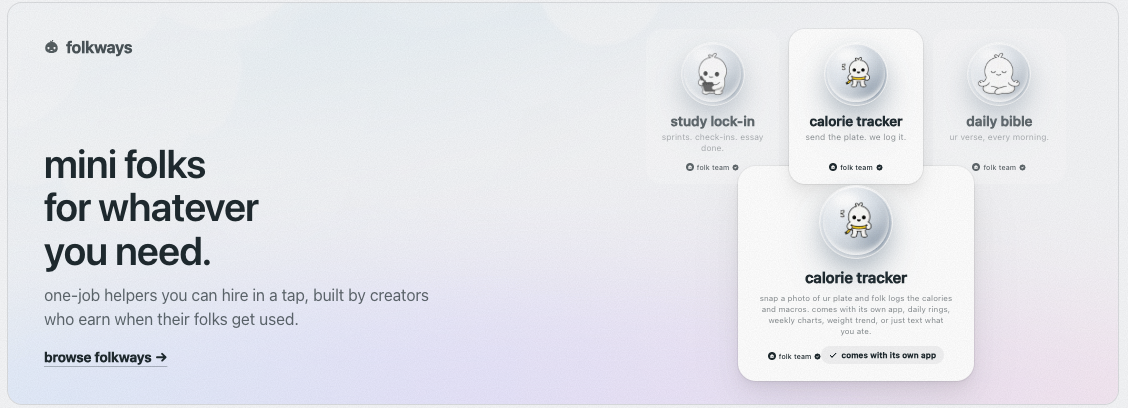
Add a friend who also uses Folk, and the two assistants can coordinate directly, like one finding a dinner reservation and pinging the other for approval before booking. Folkways extends this further into a small marketplace of purpose-built mini bots (a calorie tracker, an exercise picker, a "does he like me?" screenshot reader) that creators can build and earn a cut from when people use them.
Its own voice and communication style
Folk writes in a deliberately casual, lowercase, slightly chaotic texting voice, which fits its "friend in your pocket" pitch. That same choice is also a real limitation for some use cases.
A tester who connected Folk to his calendar and inbox liked the setup but flagged that the grammar defaults to something a bit unprofessional – reviews, which made him hesitant to let it send emails on his behalf.
Folk Pricing
| Plan | Monthly price | Annual price | What you get |
|---|---|---|---|
| Free | $0 | $0, forever | 20 messages/day, 2 connected apps, 3 reminders/month, no card required |
| Pro | $9.99/mo | $99.99/yr ($8.33/mo equivalent) | Unlimited messages, all app connections, 24/7 background monitoring, 60 min of voice calls |
| Max | $100/mo | $800/yr ($66.67/mo equivalent) | Everything in Pro, best available models, 150 min of voice calls, same-day human support |
Free trials apply to the paid tiers when you choose annual billing. Folk doesn't publicly list which payment methods it accepts beyond its standard signup checkout, which is worth confirming yourself before recommending it to a reader who asks.
Folk Pros and Cons
| Pros | Cons |
|---|---|
| Fastest setup of any AI assistant we've tested; no app, just a text | Personal-life scope only, no notes, documents, or real work management |
| Genuinely free tier with no card required | Only about three months old, with no G2, Capterra, or Trustpilot track record to check |
| Actively fights for your money (subscriptions, refunds, price drops) | Casual tone reads as unprofessional for anything work-related – reviews |
| Ships new features weekly, per its own FAQ | Memory and "gets smarter" claims are still being pressure-tested publicly, not proven at scale |
| Multiplayer concept is genuinely novel among personal AI tools | No dedicated mobile app; you're dependent on iMessage, Telegram, WhatsApp, or Discord staying up |
| $100/month Max tier is a steep jump for a narrow feature set | |
| Bank-linked features raise the trust bar for a company this young |
What People Say
Because Folk is so new, there isn't a deep well of independent reviews to pull from yet, and that's worth saying plainly rather than pretending otherwise. What exists is a small but candid mix of early reactions.
On the positive side, one commenter called the fact that:
Folk "lives right inside existing messaging apps and actually remembers context over time" a real step up from typical bots – reviews
The skepticism is just as visible, and just as public. Multiple early users pushed the founder directly on how the memory system actually works under the hood and where that data lives; questions the team answered but that remain unverified by anyone outside the company.
Combined with the one detailed structured review currently up on Product Hunt, flagging the tone as unpolished for anything beyond casual use, the read is that Folk's biggest claims (deep memory, real proactivity, safe handling of bank data) are still resting more on the founder's word than on outside evidence.
Who Is Folk Best For?
- Folk fits well if you want a low-stakes, fun nudge toward personal habits, you already text constantly and don't want another app, or you're the type who has three forgotten subscriptions draining your card right now.
- Students who need someone to nag them through an essay, and anyone curious about a more playful, personality-driven AI, will probably enjoy it.
Who it's not ideal for
- Folk isn't built for people whose real problem is professional: scattered notes, an overflowing inbox, meetings that generate action items nobody follows up on, or a calendar that doesn't talk to any of it.
- It also isn't a fit for teams needing a shared assistant, or for anyone who wants a proven track record before linking financial data to a new company.
Folk alternatives
Folk vs Saner.AI: Where Saner.AI Pulls Ahead
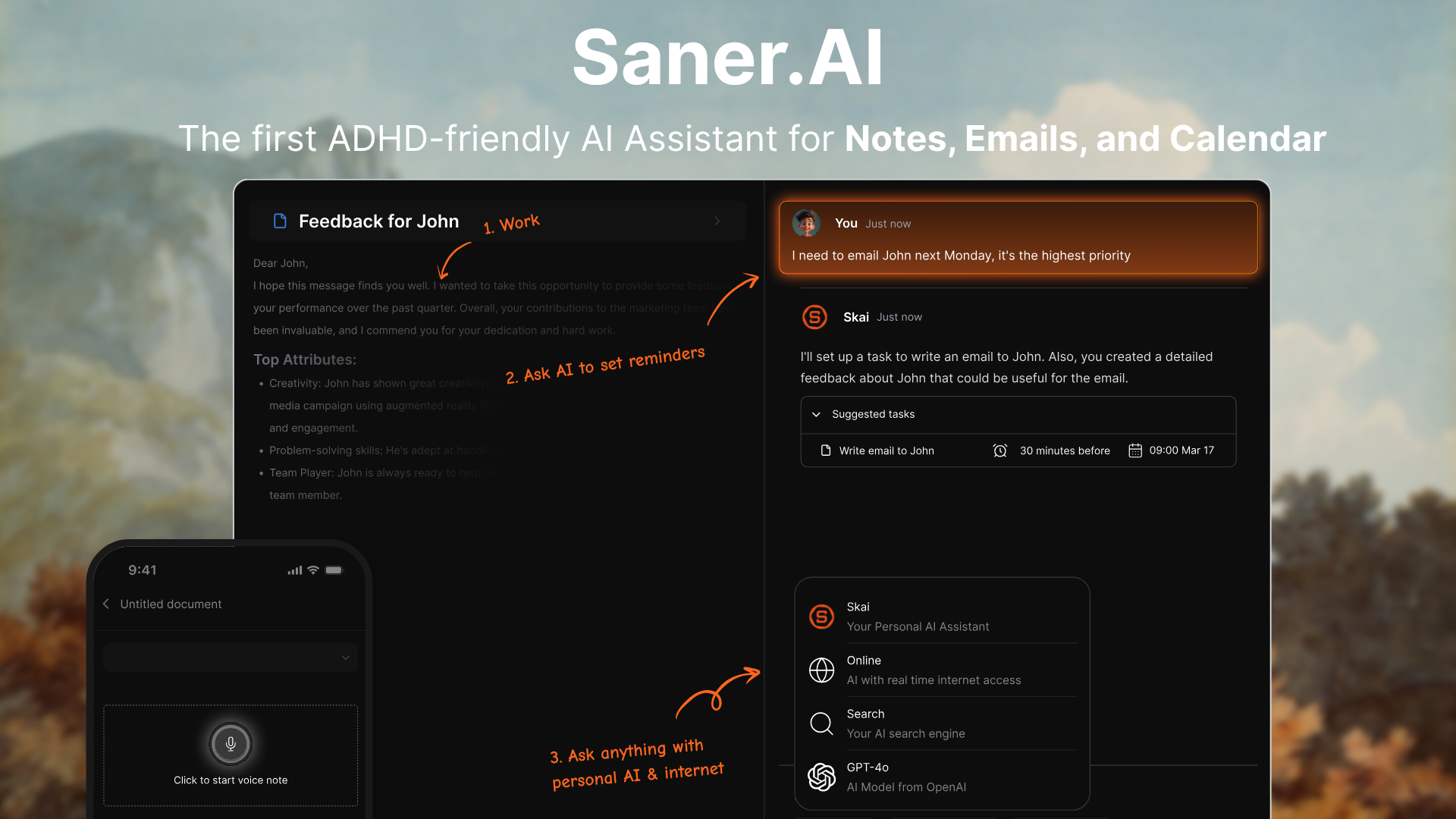
- One workspace instead of one thread: Saner.AI keeps your notes, email, calendar, and tasks connected in a single place, which directly targets the context switching that a messaging-only assistant like Folk doesn't touch.
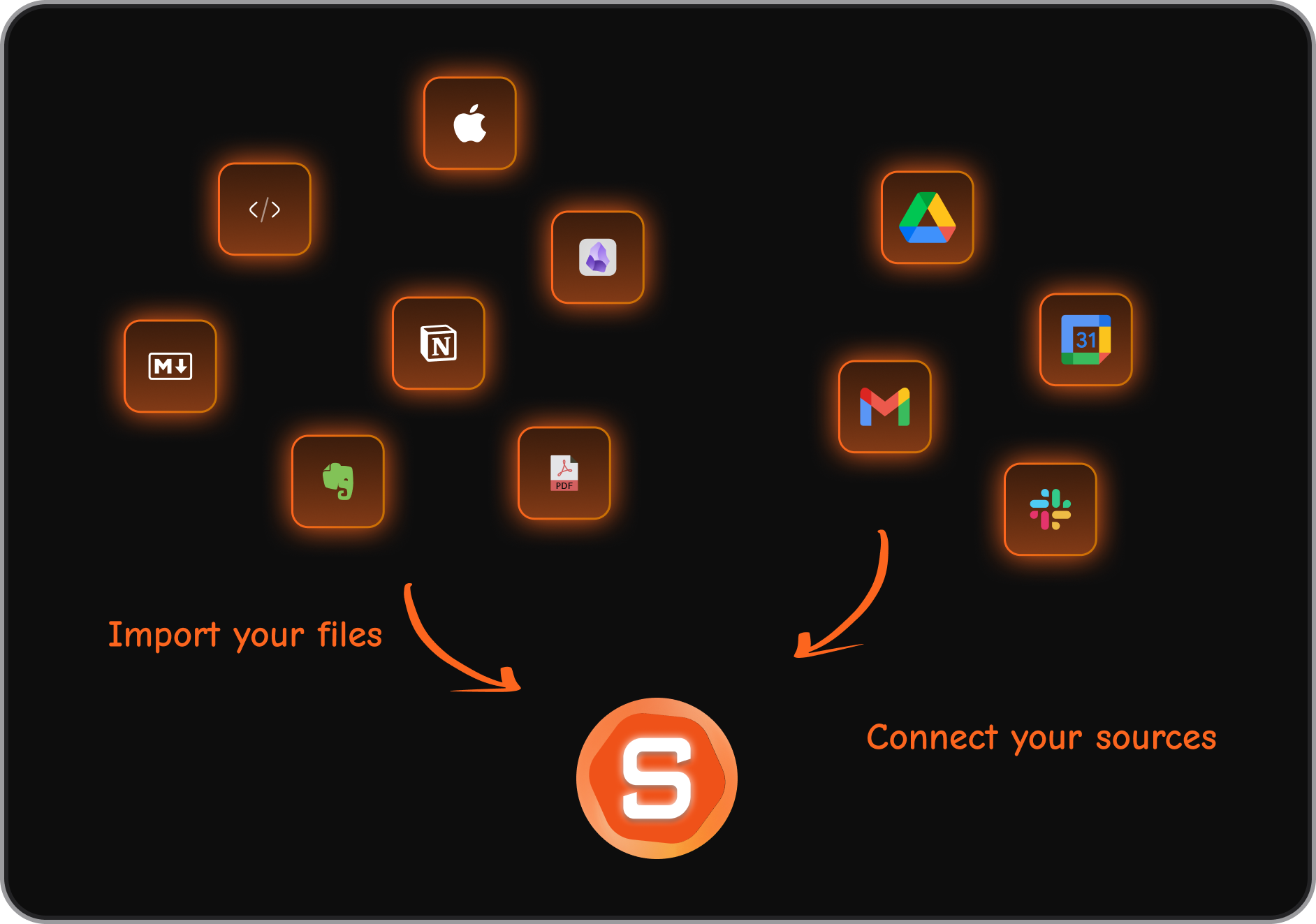
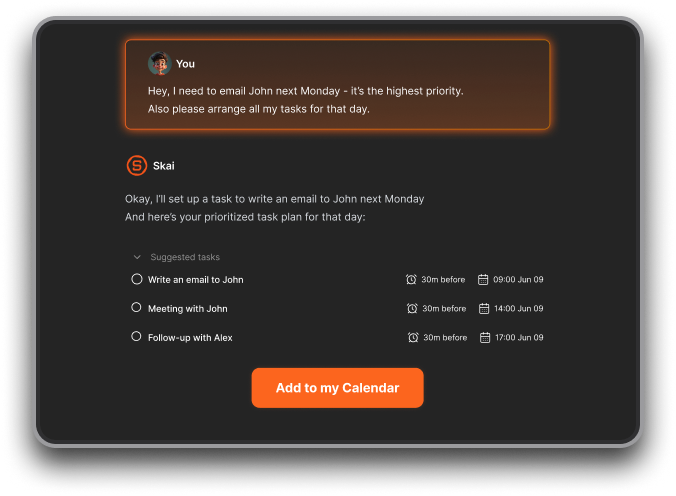
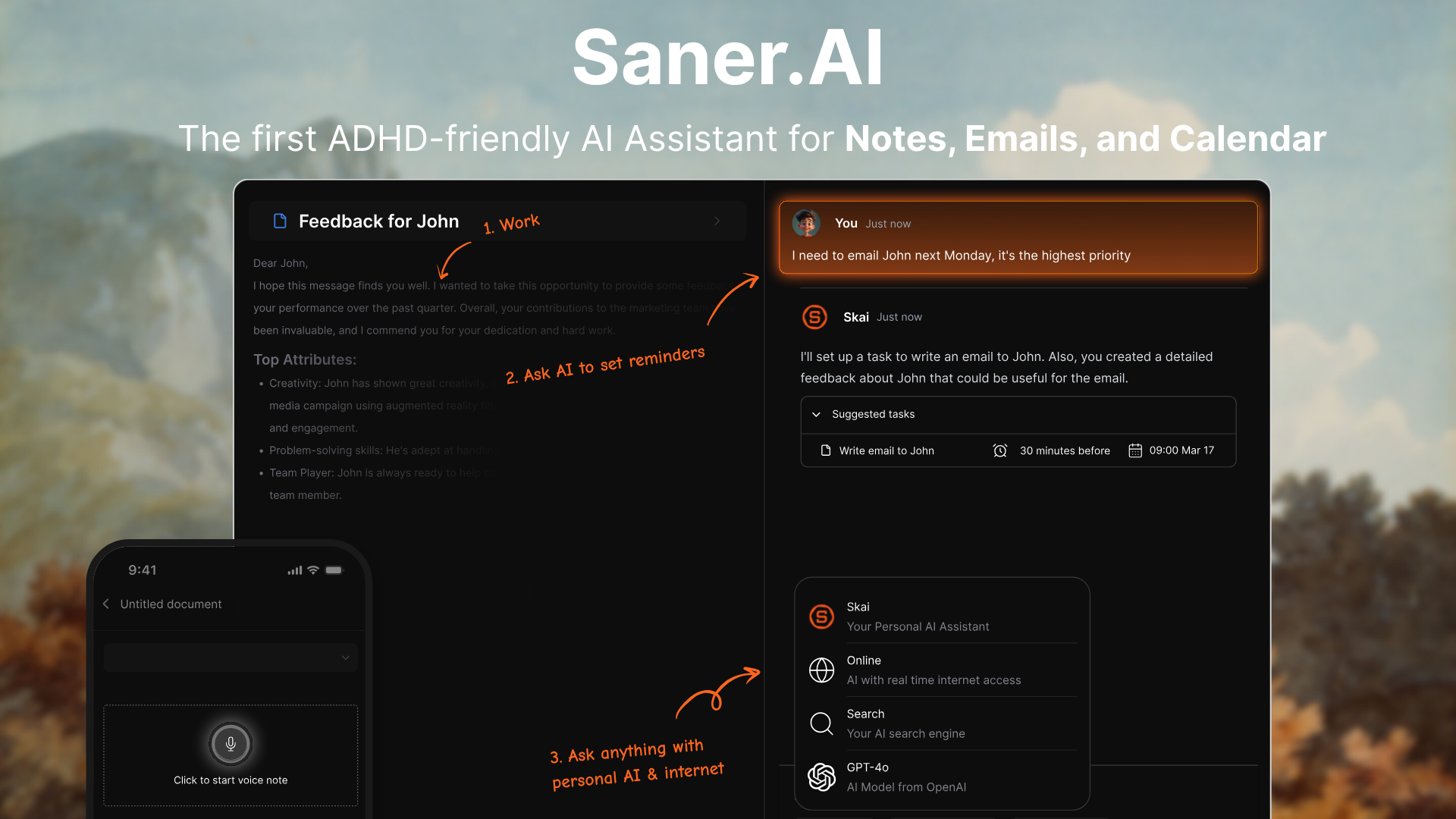
- Built for actual work, not just life admin: Saner.AI's Skai assistant turns meeting notes and half-formed thoughts into tasks and follow-ups automatically.
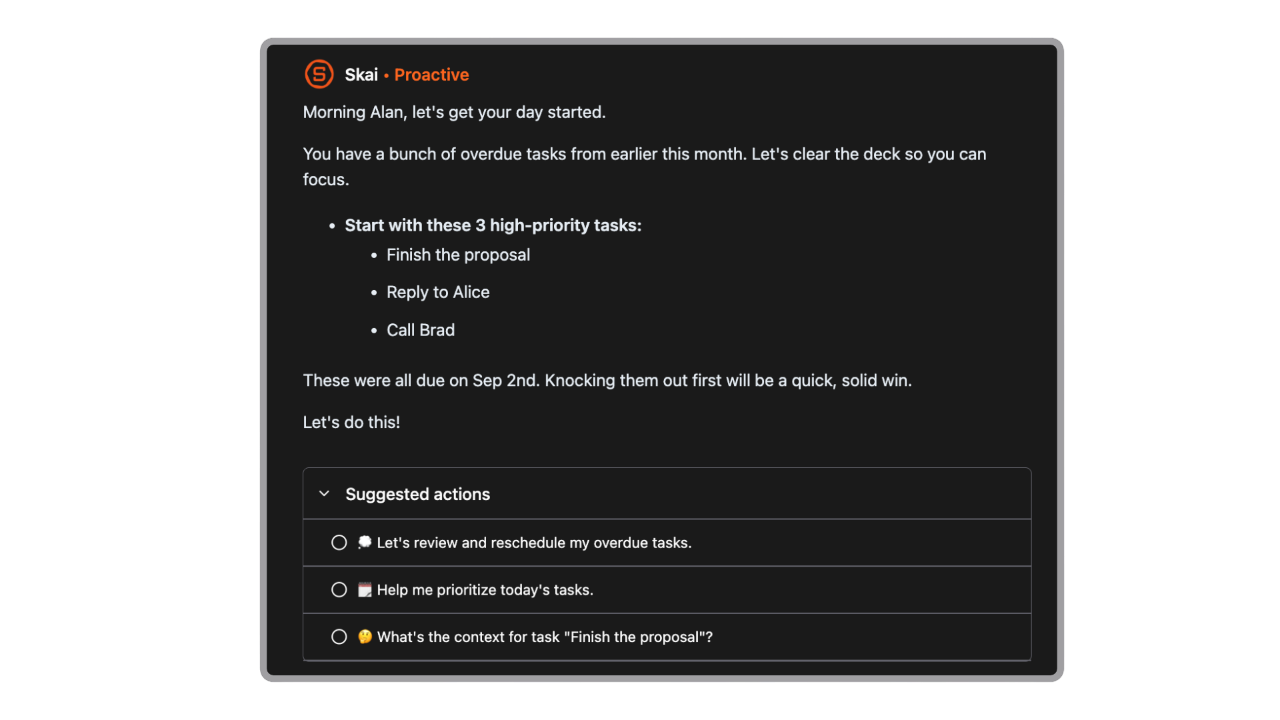
- Proactively plan your day every morning
- A longer track record: Saner.AI has been live and iterating with a base of 100,000+ professionals, with regular public release notes, compared to Folk's three months in the wild.
- Predictable pricing: Saner.AI tops out at $16/month for its most popular plan, next to Folk's $100/month ceiling for its heaviest tier.
- Who each one actually suits: Folk suits someone who wants a fun, low-stakes nudge for personal habits inside a messaging app. Saner.AI suits someone whose real bottleneck is scattered notes, a messy inbox, and too many open tabs at work, which is the exact use case behind most best AI personal assistant searches.
Saner.AI sits in a different category entirely. It's not trying to be a texting buddy. It's an AI executive assistant built to hold your notes, inbox, and calendar together so you stop losing track of your actual work, which is a problem none of the messaging-based assistants above are trying to solve.
Alternatives Comparison
| Feature | Folk | Poke | OpenClaw | Saner.AI |
|---|---|---|---|---|
| Lives in messaging apps | Yes (iMessage, Telegram, WhatsApp, Discord) | Yes (iMessage) | Yes (iMessage, WhatsApp, Telegram) | No, dedicated app + Chrome extension |
| Built for personal habits | Yes | Partial | No | No |
| Notes, email, calendar in one place | No | No | Partial (email/calendar) | Yes |
| Team or work-focused use | No | No | No | Yes |
| Entry price | Free, then $9.99/mo | Paid only | Free, open source | Free, then $8/mo |
- Poke is Folk's closest direct competitor and the one its own founder was asked to compare against on launch day. It's purpose-built for the same iMessage-first, proactive-texting feel, but doesn't reach into WhatsApp or Discord the way Folk now does.
- OpenClaw (formerly Clawdbot) is the open-source option in this space, aimed at people who want to self-host and customize an agent that handles email, calendars, and flight check-ins across chat apps, at the cost of the polish and easy setup Folk offers out of the box.
Final Verdict
Folk does what it says it'll do, and does it delightfully. The QR-code setup, the multiplayer concept, and the subscription-fighting feature are all real, useful ideas that most competitors haven't shipped yet.
But the tool is new, has a single detailed independent review to its name, and asks you to trust it with bank access before it's had time to earn that trust anywhere you can independently check.
If your goal is a fun nudge to hit the gym or stop bleeding money on forgotten subscriptions, it's worth the free tier. If what you actually need help with is your job, your inbox, and the notes you keep losing track of, that's a different problem, and Saner.AI is built specifically for that one.
Stay on top of your work and life effortlessly
FAQ
Is Folk (folk.com) the same as the Folk CRM?
No. Folk.com, covered in this review, is a personal AI texting assistant from Nozomio Labs. Folk.app is a completely separate, Paris-based CRM company for sales and relationship management. They share a name and nothing else.
How much does Folk cost?
Folk is free forever for 20 messages a day. Pro runs $9.99/month (or $99.99/year), and Max runs $100/month (or $800/year) for the heaviest usage and priority support.
Which messaging apps does Folk work on?
iMessage, Telegram, WhatsApp, and Discord. There's no separate app to download.
Is it safe to link my bank account to Folk?
Folk uses a read-only Plaid connection and says it never moves money or cancels anything without your approval first. That said, it's a young company with no long independent review history yet, so it's reasonable to want more evidence before connecting anything financial.
Can Folk replace a work tool like Notion or Saner.AI?
No. Folk doesn't manage notes, documents, or a real calendar-and-email workflow. It's built for personal reminders and life admin, not professional productivity.
Is Folk's "memory" feature actually reliable?
It's an ambitious design (a knowledge graph rather than a simple growing chat log), but it's still new enough that its real-world reliability hasn't been independently verified at scale yet.
Stay on top of your work and life effortlessly