Morning Routine for Success: Easy Science-backed Methods and Examples


Want a morning routine that actually sticks - and makes your workday smoother, calmer, and more productive?
This guide blends research, real-world examples, and flexible tools for ADHD, so you can build a routine that fits your life, not someone else’s.
TLDR
Q: What is a “morning routine for success”?
A: A simple, repeatable set of early-day actions that boost energy, focus, and momentum - e.g., consistent sleep/wake, light movement, sunlight, hydration, brief planning, and one focused work block. These habits support cognitive performance and mood while preventing decision fatigue later.
Q: How do I create a morning routine for productivity?
A: Start with sleep first, then stack 3–5 tiny habits (light, movement, water, plan, first focus block). Anchor each habit to a cue (e.g., “after I brush teeth, I…”) and keep friction low (clothes out, water ready). Test for 2–3 weeks, then tweak.
Q: Do I need to wake up at 5 a.m.?
A: No. Align your routine with your chronotype (morning-type vs evening-type) and protect 7+ hours of sleep. Many people perform best when tasks match their natural peak times.
Q: What are the best morning habits for productivity?
A: Light (ideally natural), short exercise, hydration, mindful breathing or meditation, quick daily plan, and one distraction-free deep-work sprint. (Details and citations below.)
Q: How long does it take to make a routine stick?
A: Habits often become automatic, on average 18–254 days with consistent repetition and cues.
What is a Morning Routine for Success?
A morning routine for success is a series of intentional habits done shortly after waking up that set the tone for a productive, focused, and energized day.
It doesn’t have to be rigid or start at 5 AM - it just needs to support your mental clarity, physical energy, and priorities.
Key Goals of a Successful Morning Routine:
- Boost energy and alertness
- Improve focus and decision-making
- Reduce stress and cognitive overload
- Build momentum through early wins
- Align daily actions with long-term goals
Why Morning Routines Matter (with research)
- The 2025 J. Applied Psychology study shows morning routine disruptions harm calmness, increase depletion, and reduce engagement.
7 Core Principles of a Successful Morning Routine

- Sleep first. Protect 7–9 hours; keep wake time consistent.
- Get light early. 5–10 minutes of outdoor light (or bright indoor light if needed).
- Move a little. 5–20 minutes (walk, mobility, bodyweight circuit). Consistency beats intensity.
- Hydrate + (optional) protein. Water first; a protein-forward breakfast may aid satiety and near-term concentration for some.
- Calm your nervous system. 2–5 minutes of mindful breathing or meditation.
- Plan once, execute more. 3-item priority list; schedule your first deep-work sprint. Use “if-then” plans.
- Single-task to start. Avoid early inbox/social feeds; task-switching is costly.
3 Example Morning Routine Examples (With Pros & Cons)
1. 🕔 The 5 AM CEO Routine
Ideal for: Founders, execs, high-performers
Schedule:
- 5:00 – Wake up, hydrate
- 5:10 – Meditation or breathwork
- 5:30 – Workout
- 6:15 – Shower & protein-rich breakfast
- 6:45 – Plan the day, review goals
- 7:00 – Deep work session
✅ Pros:
- High productivity before distractions begin
- Anchors the day with intention and control
❌ Cons:
- Not sustainable for night owls or parents of young children
- Requires early bedtime discipline
2. 🕖 The 7 AM Balanced Professional Routine

Ideal for: Office workers, creatives, hybrid workers
Schedule:
- 7:00 – Wake, hydrate, light stretching
- 7:15 – Coffee + journaling or gratitude
- 7:30 – Review calendar & to-dos with Saner.AI
- 7:45 – Breakfast + light reading/podcast
- 8:15 – Prepare for work
✅ Pros:
- Gentle transition into the day
- Prioritizes clarity and planning
❌ Cons:
- Less early deep work time
- Can get hijacked by family or email distractions
3. 🕗 ADHD-Friendly “No Pressure” Routine
Ideal for: Neurodivergent professionals, entrepreneurs, executives
Schedule:
- 8:00 – Wake up, use Saner.AI to auto-plan day with voice note
- 8:10 – Move your body (dance/stretch/shower)
- 8:30 – Quick breakfast, listen to mood-boosting music
- 9:00 – Check Saner for reminders + suggested tasks
- 9:15 – Start with a task you feel like doing, not what you “should”
✅ Pros:
- Reduces overwhelm and decision fatigue
- Built-in flexibility for low-motivation days
❌ Cons:
- May require external accountability
- Needs experimentation to fine-tune
Customize to Your Goals (and Chronotype)
- Pick your “why.” Focus (study, deep work), energy (mood, movement), or clarity (planning, journaling).
- Choose 3–5 behaviors that target your goal (e.g., focus → light, breath, 60-min work sprint).
- Match routine to chronotype. Morning larks may front-load deep work; night owls can start later but still standardize cues. Performance often improves when tasks align with your preferred time.
- Use “if-then” plans: “If I pour coffee, then I open my Top-3 card.” This tiny specificity nudges follow-through.
- Iterate weekly. Keep what works, trim what doesn’t.
Common Morning Routine Mistakes (and What to Do Instead)
| Mistake | Why It’s Harmful | What to Do Instead |
|---|---|---|
| Checking phone right away | Floods brain with dopamine, stress | Delay phone use for 30 mins |
| Skipping hydration | Dehydration = brain fog | Drink water before caffeine |
| Overplanning | Too many tasks = overwhelm | Focus on 1–3 priorities |
| All-or-nothing mindset | Leads to guilt or inconsistency | Be flexible—missing a day isn’t failure |
Tools to Make Your Mornings Smoother
🔧 Saner.AI – Your ADHD-Friendly Assistant
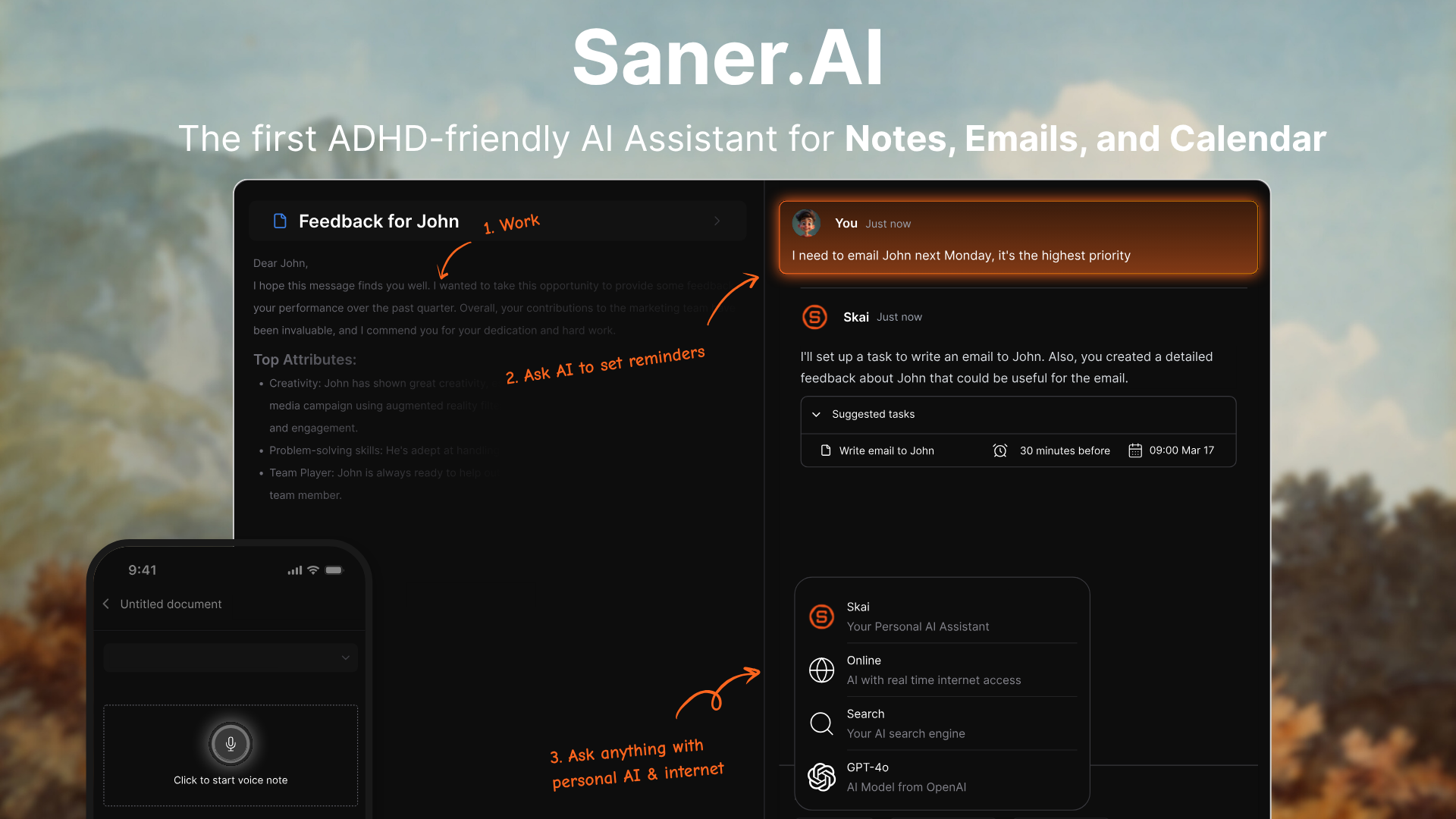
Instead of scrambling through email, to-dos, and random notes, just talk to Saner.AI.
- Automatically generate a daily plan from your notes, emails, and calendar
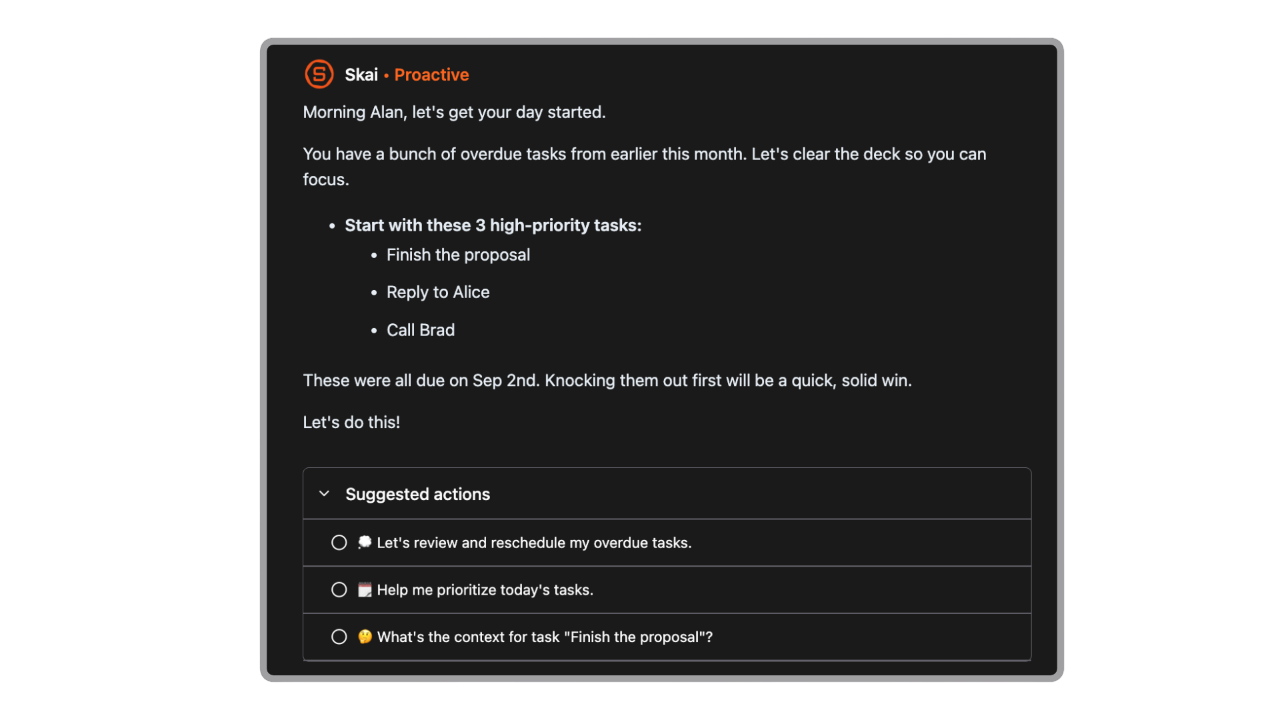
- Turn morning messy thoughts into tasks with reminders

- Use voice, not clicks, to organize your day

🧠 Especially useful for:
- Planning your top 3 priorities
- Reducing decision fatigue
- Keeping track of follow-ups and routines
Other Helpful Tools:
- Sleep Cycle: Wake up during light sleep
- Spotify Morning Playlists: Mood regulation via music
FAQ on how to have a successful morning routine
1) What’s the single best morning habit for productivity?
If you only pick one: protect sleep and then do one focused work sprint before messages. Everything else stacks on that.
2) Is breakfast necessary?
A high-protein, low-carb breakfast can make you feel fuller for a few hours and may boost mental focus before lunch.
3) Coffee before or after breakfast?
Either is fine - just watch timing so it doesn’t impair sleep later. Many people do best with a caffeine cutoff 6–8 hours pre-bed.
4) How much light do I need?
Aim for 5–10 minutes outdoors soon after waking (more if overcast). If you can’t get outside, use bright indoor light. PMC
5) I’m a night owl - can I still build a successful routine?
Yes. Shift gradually (15–30 minutes at a time), and schedule your hardest work at your personal peak. Synchrony with your chronotype often helps.
6) What’s a good 5-minute calming practice?
Try cyclic sighing (double inhale, long exhale) for 5 minutes to reduce stress and steady your mood.
Final Thoughts: Your Morning, Your Momentum
Your morning doesn’t need to be perfect - it needs to be yours. A great routine isn’t about discipline alone; it’s about designing your mornings to match your values, energy, and goals.
Start small. Stay curious. And don’t let someone else’s 5 AM grind dictate your rhythm.
Ready to upgrade your mornings?
🧠 Try talking to Saner.AI: “Hey, what should I focus on today?”
Sometimes, clarity is just one question away.
Start your mornings effortlessly