Manus Alternatives: We tested the best 5 in 2026


Manus is brilliant at executing tasks in its own isolated cloud bubble, and it often feels like a walled garden that doesn't actually know me or my local files.
The gap in the current "agentic" landscape is the lack of a bridge between autonomous execution and personal context; we don't just need an AI that can browse the web, we need one that understands our specific history, security needs, and existing workflows without charging a fortune in "credits" for every step it takes.
In this article, we’ll look at which platforms are best for developers who want total control, which ones serve as the perfect "digital intern" for research, and where you’ll face the biggest trade-offs in terms of setup time and privacy.
Quick guide: What are the best Manus alternatives in 2026?
2. Genspark: Best for market research and "knowledge harvesting" that requires beautifully formatted, multi-source visual reports.
3. Saner.AI: Best for personal knowledge and task management. It proactively manages your tasks and calendar
4. ChatGPT: Best all-rounder for general tasks and users who want a polished, native browsing experience within a familiar chat interface.
5. OpenClaw: Best for privacy-conscious users and developers who want a local-first, open-source agent that runs on their own hardware.
Brief Look at the AI Agent Market
AI Agents are growing at a fast pace; however, this comes with concerns
How We Tested These Manus Alternatives
A true alternative to an autonomous agent must do more than just answer questions; it must act. We evaluated these platforms based on the core challenges of autonomous AI in 2026:
- Task Autonomy: Can the agent handle multi-step loops (e.g., research → analyze → draft → export) without you babysitting every prompt?
- Environmental Access: Does it work in a cloud sandbox, or can it interact with your local files and desktop apps?
- Contextual Memory: How well does it remember your specific preferences, brand voice, or past projects between sessions?
- Cost Predictability: Does it use a confusing credit system like Manus, or a more transparent flat-rate subscription?
- Data Sovereignty & Security: Where is your data stored? Does it offer local-first options or enterprise-grade encryption?
- Integration Depth: Can it actually "click" buttons in your favorite tools (like Gmail or Notion), or does it just give you instructions on how to do it yourself?
What Are The Best Manus Alternatives in 2026?
The best Manus Alternatives are: ChatGPT Agent, Claude, Genspark, OpenClaw and Saner.AI
🤖 Best Manus Alternatives - Full Comparison
| 🧰 Tool | 🎯 Best For | ⚙️ Key Features | 💰 Pricing (2026) |
|---|---|---|---|
| Saner.AI | AI-powered organization & knowledge management | AI note capture, task organization, natural language search, ADHD-friendly workflow | Free; Paid ~$8–16/mo |
| ChatGPT | General AI assistant | Writing, research, coding, file analysis, GPTs, voice mode | Free; Plus from $20/mo |
| Claude | Long-form writing & document analysis | Large context window, natural writing, PDF analysis, coding support | Free; Pro from $20/mo |
| Genspark | AI search & agent workflows | AI copilots, web research, autonomous task execution | Free trial; Paid plans from ~$19.99/mo |
| OpenClaw | Open-source AI agent experimentation | Autonomous AI workflows, agent customization, developer-focused setup | Free (open-source) |
1. Claude

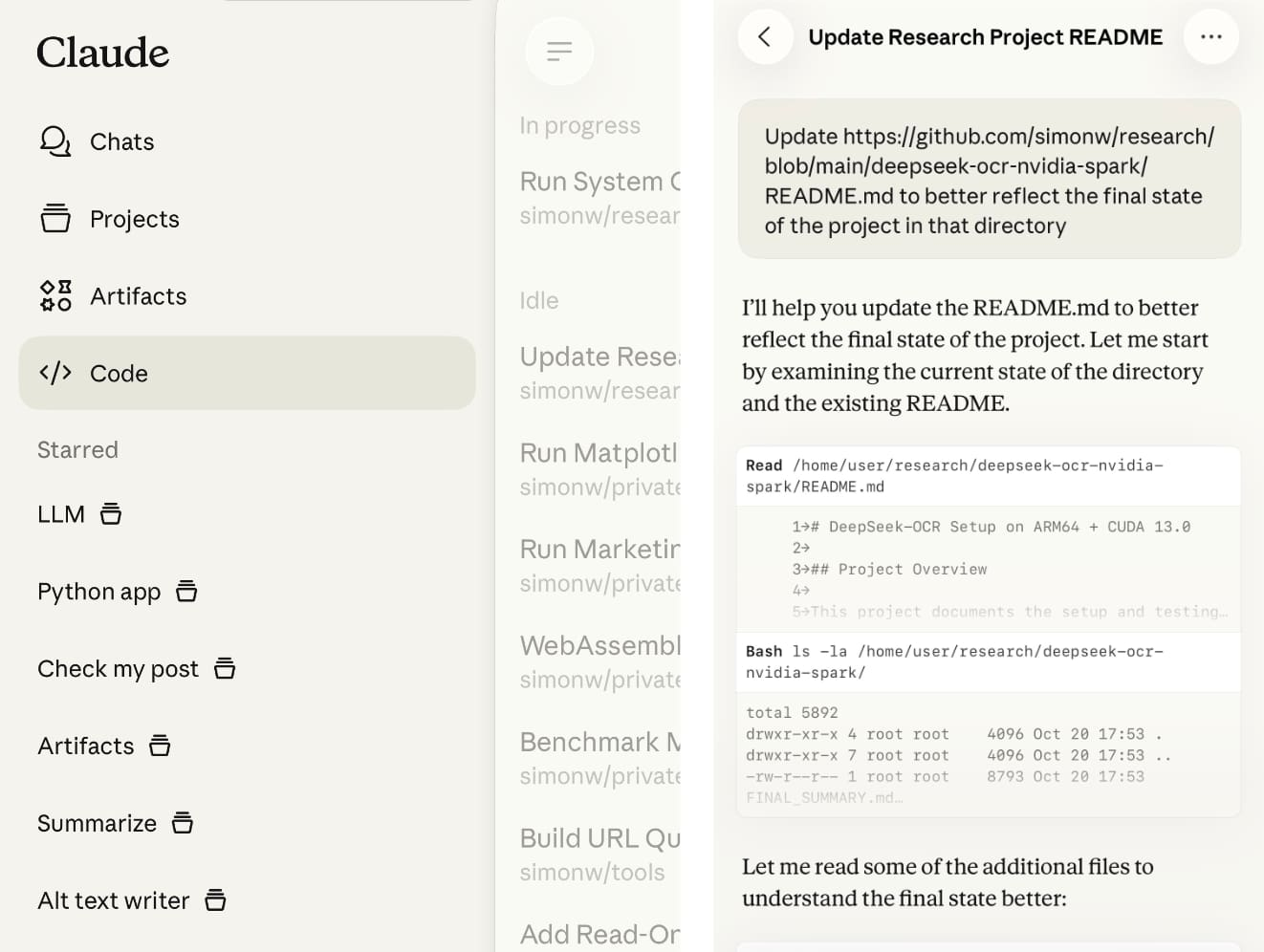
Claude, developed by Anthropic, has evolved into a premier "agentic" AI assistant that serves as a powerful alternative to Manus AI. While Manus focuses on high-level task automation, Claude excels by blending S-tier reasoning with the ability to execute tasks directly on your computer or within a dedicated workspace.
Key feature
- Agentic Computing (Claude Code). Claude now operates as a functional agent that can interact with your local files and terminal to execute commands and manage workflows.
- Extended Thinking Mode. The Opus model series includes a dedicated reasoning phase where the AI "thinks" through multi-step logic before providing a final response, drastically reducing errors in complex tasks.
- Massive Context Window. With a capacity of up to 200,000 tokens (expandable to 1M for enterprise)
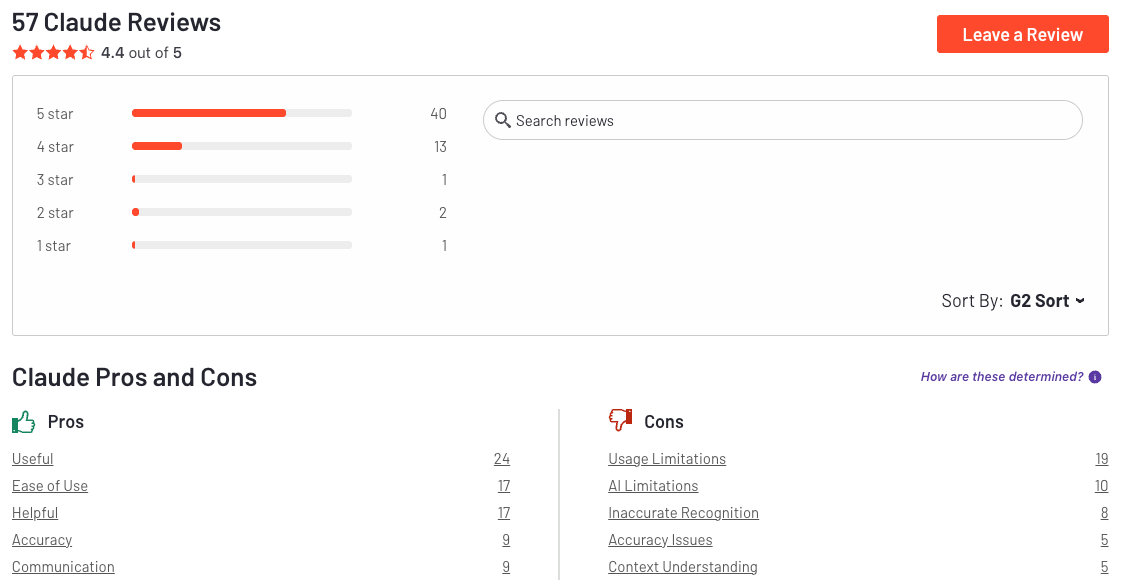
"I’ve uploaded long research docs, multi-chapter drafts, and messy notes without watching the model lose context." — verified review
- Model Context Protocol (MCP). Claude uses the Model Context Protocol to integrate with over 6,000 third-party apps, allowing it to pull data from Google Drive, Slack, and GitHub to inform its actions.
Pros
- I like how human and natural the writing feels compared to other models; it doesn't sound like a "robot" wrote it.
- I appreciate the "Projects" feature, which lets me upload my brand guidelines so Claude always stays on-voice.
- I feel it’s helpful that the coding accuracy is significantly higher, saving me hours of debugging time.
Cons
- I am frustrated by the strict message limits on the free tier, which sometimes kick in just as I’m getting into a flow.
- It still lacks a native image generation tool, forcing me to switch to other apps for visuals.
- It's more expensive than typical consumer AI tools
Suitable for:
- Professionals, researchers, writers, and teams looking for an AI assistant that can think deeply, handle long-form tasks, and support reasoning-heavy workflows.
- Also a strong fit for anyone building custom AI agents or productivity tools.
How to start:
- Go to claude.ai and create an account. You can try it for free, then upgrade to Claude Pro to access Claude Opus.
Claude Review (source)
2. ChatGPT Agent
ChatGPT Agent has emerged as the most formidable "General Purpose" contender. While newcomers like Manus AI focus on hyper-fast browser execution, OpenAI has leveraged its massive GPT-o1 and GPT-5 architecture to create an agent that reasons through complex, multi-step digital workflows.
Key features
- Autonomous "Computer Use" (CUA). This feature allows the agent to take over your browser or desktop environment to perform actions like a human would—clicking buttons, scrolling, and filling forms.
- Multi-Agent Orchestration. For instance, one agent researches a topic while another drafts a report and a third sends it via Gmail. File creation: Generates Google Docs, Excel-style spreadsheets, slides, and reports
- Native App & MCP Integration. Unlike Manus, which primarily relies on web-scraping, OpenAI uses the Model Context Protocol (MCP) to connect directly to tools like GitHub, Google Workspace, and Microsoft 365.
Pros
- It can actually complete tasks end-to-end, like booking travel or compiling a market analysis
- I appreciate the deep integration with the Apple/Windows ecosystem; it feels like the agent actually "understands" my files rather than just seeing a screenshot.
- It uses the o1-reasoning model to double-check its own work, significantly reducing the "hallucinated clicks" I see in other agents.
Cons
- Usage is limited unless you're on the most expensive plan
- Doesn’t yet remember personal context or preferences between sessions
- Some people are uneasy about how autonomous it feels - especially after stories of it bypassing CAPTCHAs
- I feel frustrated by the "Confirmation Problem," where the agent pauses every 30 seconds to ask for permission for sensitive actions, which kills the "autonomous" vibe.
Pricing:
- Only available for paid ChatGPT users
- Plus and Team plans: ~40 agent messages/month
- Pro plan (~$200/month): ~400 agent messages/month
- No access on free plan
Suitable for:
- The OpenAI Agent is best for Power Users and Knowledge Workers who are already deep in the ChatGPT ecosystem.
- If your workflow involves heavy cross-app coordination (e.g., pulling data from a PDF, updating a CRM, and then Slack-ing a team), this is the most stable Manus alternative available in 2026.
How to start:
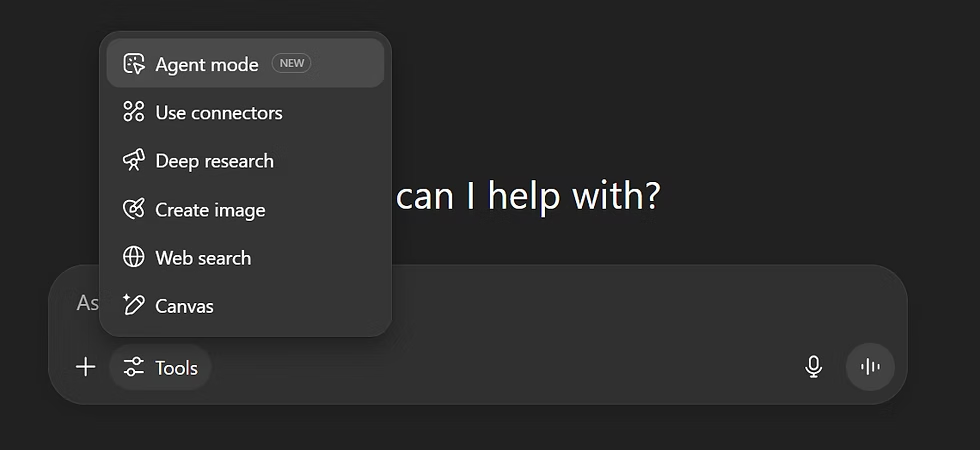
- If you’re on ChatGPT Plus or Pro, go to the ChatGPT interface and activate the Agent feature from the tools menu
3. Genspark
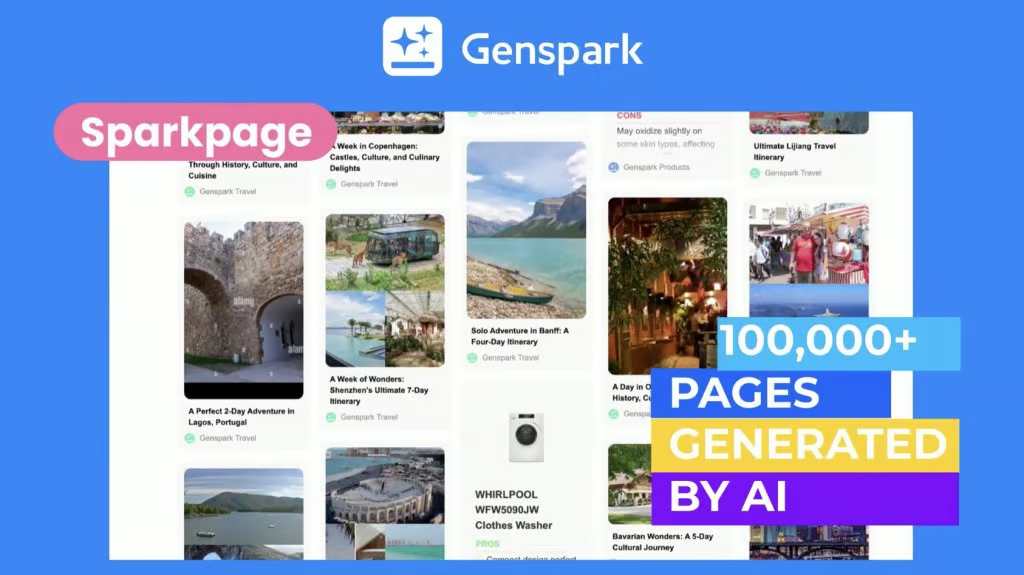
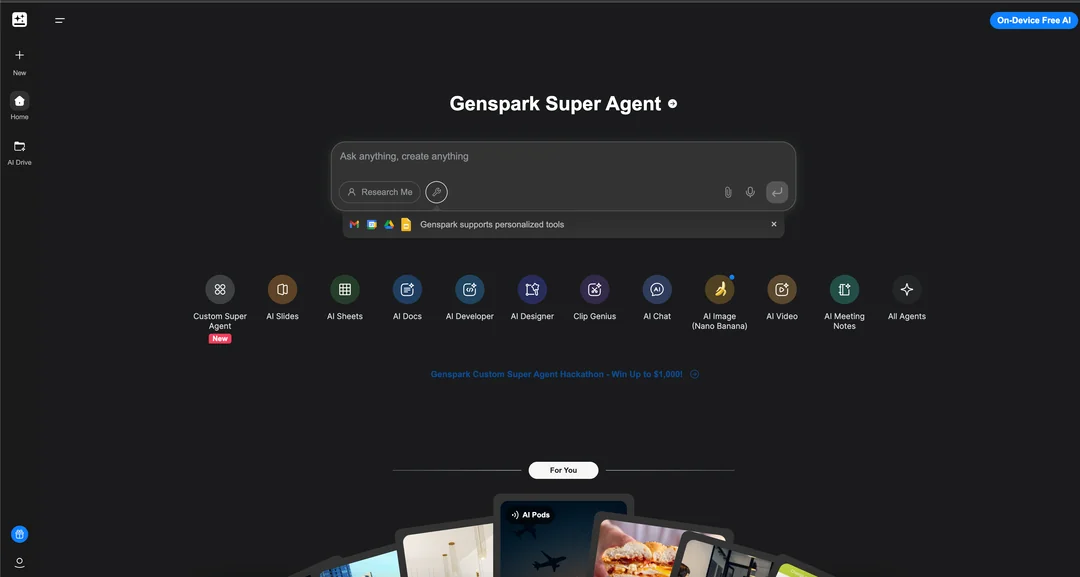
Unlike traditional search engines that provide a list of links, or agents like Manus that focus heavily on technical execution, Genspark uses a multi-agent system to synthesize information into structured, shareable "Sparkpages."
In 2026, it has gained massive hype for its "Call for Me" feature and its ability to act as a full-scale research analyst, moving beyond simple chat to deliver ready-to-use reports, slide decks, and live data tables.
Key features
- Multi-Agent "Sparkpages". Genspark doesn't just answer questions; it assigns sub-tasks to specialized agents to build a comprehensive, multimedia webpage from a single prompt.
"Reviewers mostly like Genspark for turning searches into clean, shareable pages that feel more curated than a standard list of links." —Verified Review
- AI Sheets (The Research Analyst). This feature functions as an autonomous data scraper, allowing users to find and organize web data.
- Call for Me" Super Agent. Genspark can actually place real-world phone calls to handle tasks like booking reservations or checking store inventory, returning a transcript to the user.
- Parallel Multimedia Creation. Genspark is optimized for speed, generating slides, images, and documents simultaneously to compress hours of work into minutes.
Pros
- Sparkpages feel like mini-reports with summaries, sources, and a follow-up chat interface
- You can build full landing pages from a single prompt, with good visual layouts
Cons
- Trust issues: Some users reported problems with lost credits and poor customer support
- It’s not made for enterprise use - no deep integrations, compliance controls, or team workflows
- Occasionally the output (especially media) can be off or glitchy when pushed too hard
Pricing:
- Free forever plan available (includes daily credits and Sparkpages)
- No official paid plans yet, though premium options may be added soon
Suitable for:
- Freelancers, marketers, content creators, and small teams looking for a creative AI assistant that can generate fast, polished outputs without the complexity of full-blown agent setups.
How to start:
- Just go to genspark.ai, create a free account, and start building your first Sparkpage or content block in minutes.
4. OpenClaw
OpenClaw is a viral, open-source autonomous AI agent framework designed to run locally on your hardware. Unlike cloud-dependent alternatives, it acts as an "orchestration layer" that connects large language models (LLMs) like Claude or GPT-5 directly to your local files, web browser, and messaging apps.
Key feature
- Universal Channel Integration. OpenClaw bridges the gap between AI and your daily communication by living inside the apps you already use, rather than a separate browser tab.
- Local-First Autonomous Execution. The system runs a local Gateway daemon that allows the AI to interact with your file system and execute code directly on your machine.
- Self-Improving "ClawHub" Skills. With over 3,000 community-contributed skills, OpenClaw can be extended to handle everything from car price negotiations to complex DevOps pipelines.
- "24/7 Jarvis" capability. It doesn't just wait for prompts; it proactively completes tasks, manages your calendar, and executes shell commands across 50+ integrations while you sleep.
Pros
- I feel it’s helpful that my sensitive data stays on my local drive instead of being sent to Meta’s cloud servers.
- I like the proactive "Cron" features; I love waking up to a daily report already sitting in my Telegram.
Cons
- The setup is a bit daunting for non-technical users compared to Manus's "one-click" login.
- I’m concerned about the security risks, as giving an AI agent full shell access to my laptop requires a lot of trust in my own prompting.
Suitable for
- OpenClaw is the "gold standard" for Privacy-Conscious Power Users and Developers.
- If you are comfortable using a terminal and want a 24/7 assistant that has deep access to your local files and professional workflows (without a $2,000/year price tag), OpenClaw is your best bet.
5. Saner.AI
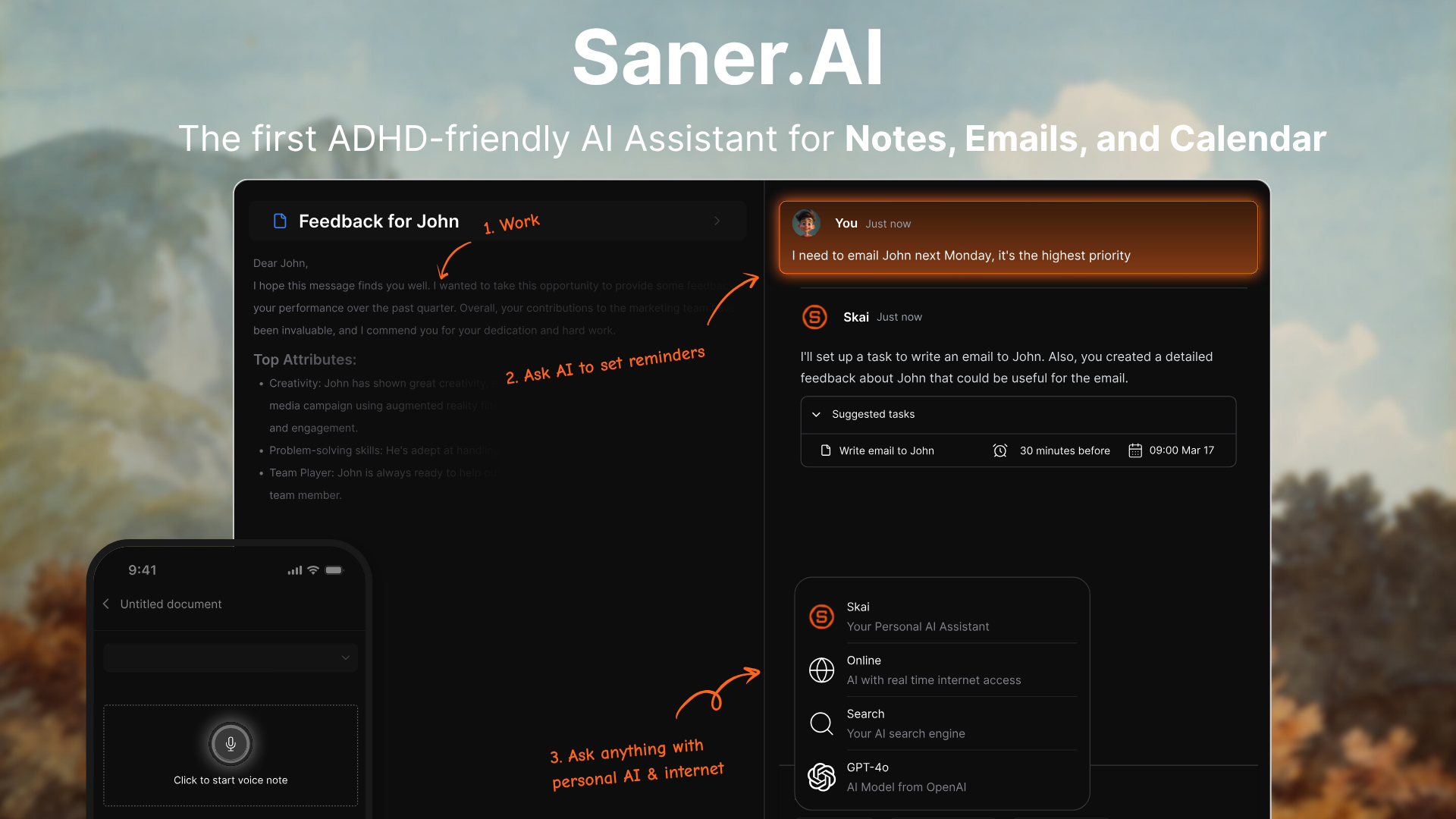
Saner.AI is a proactive AI assistant that captures notes, emails, tasks, and calendar events into one searchable workspace. It helps you organize scattered thoughts, turn them into actionable tasks, and surface relevant insights when you need them - without jumping between apps.
Key features
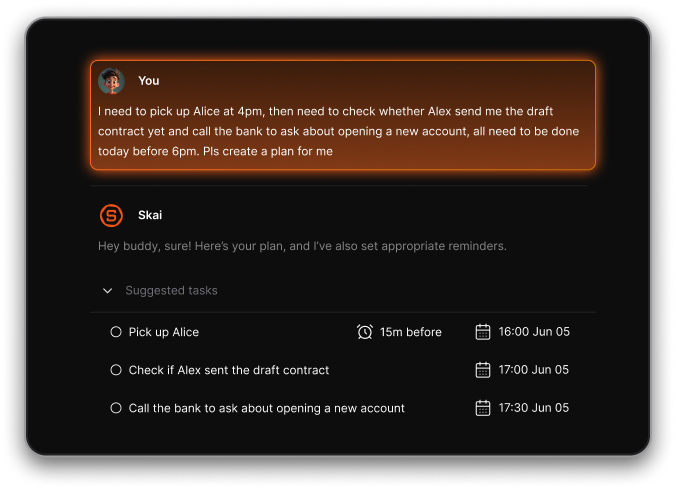
- Daily Plan Generator: Wake up to a day plan crafted by AI, including tasks and time suggestions
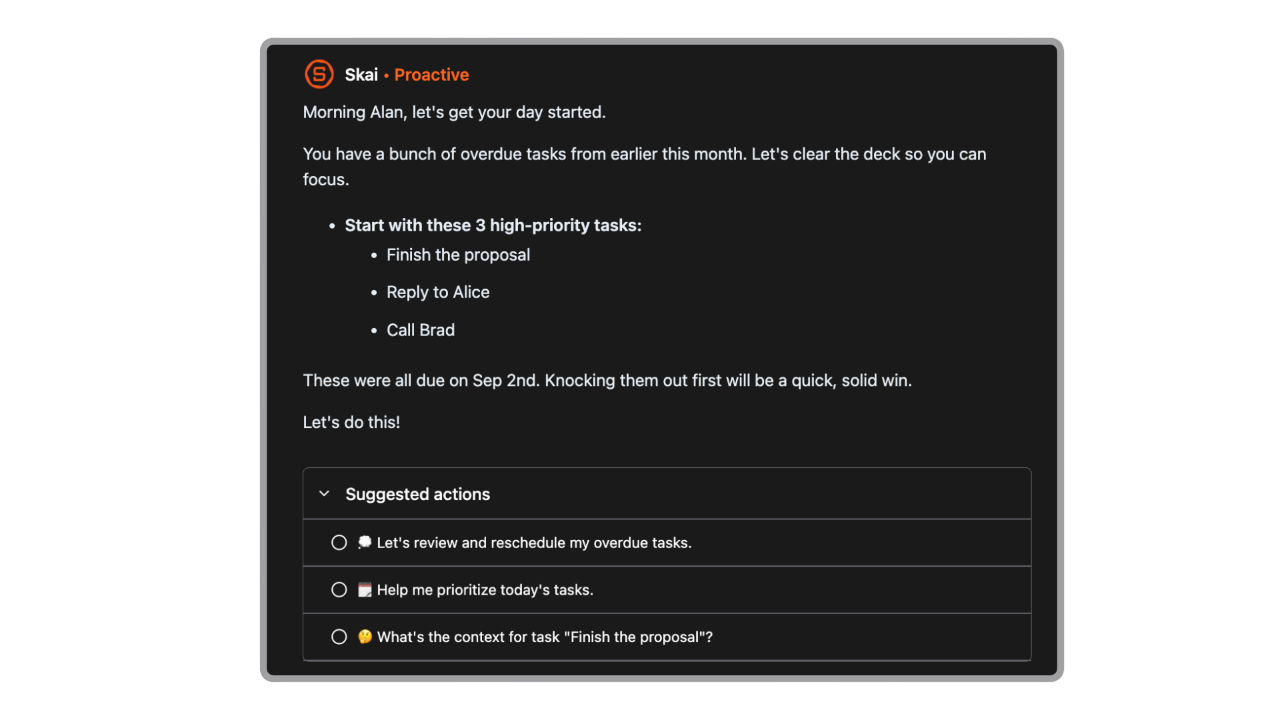
- Skai, the AI Task Assistant: Turns messy thoughts into structured tasks, auto-assigns deadlines, and checks in on progress
- Auto-Capture from Email: Turn emails into tasks, reminders, or summaries with a click
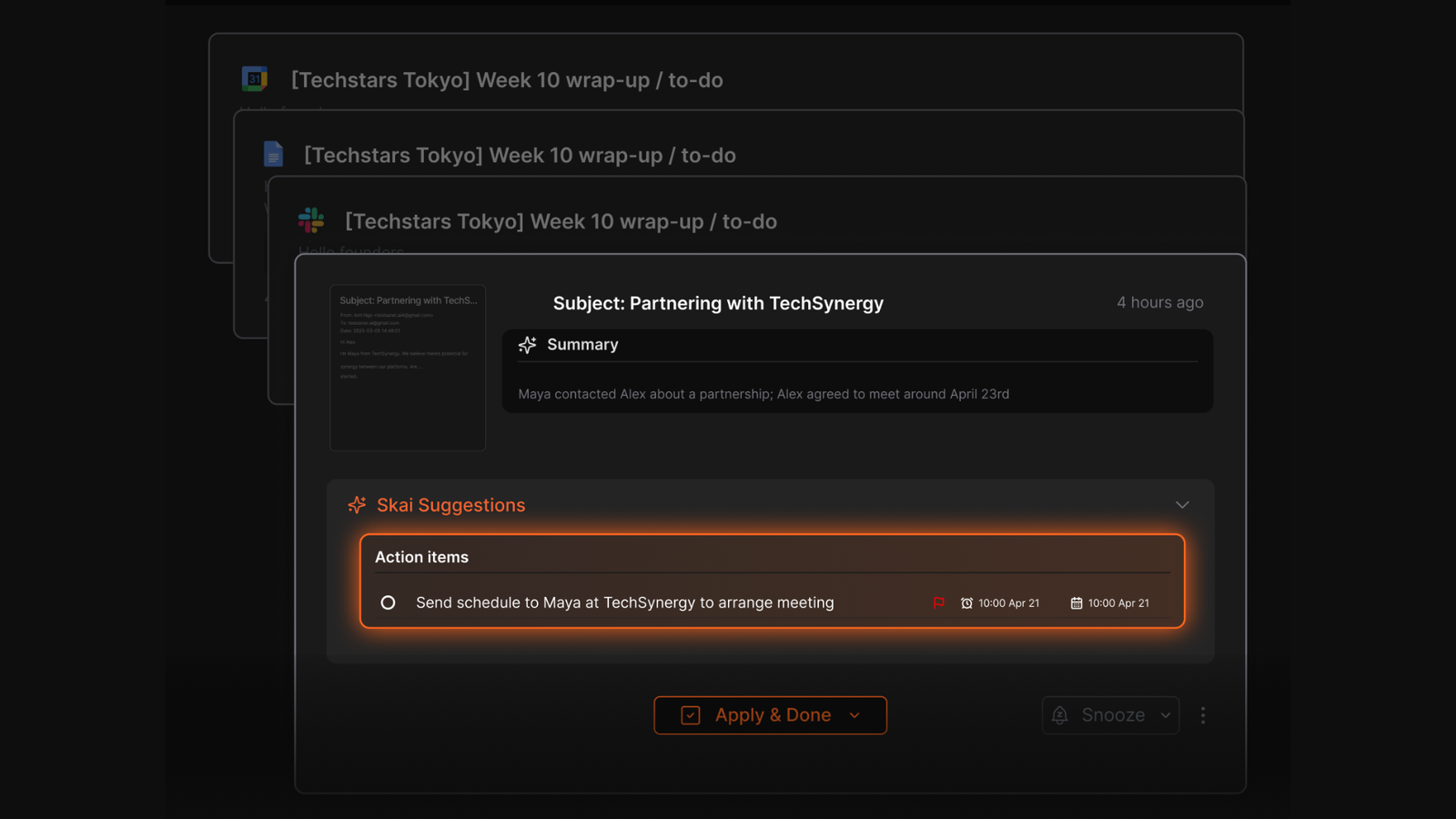
- Smart Knowledge Hub: Brings together notes, emails, Google Calendar, Slack messages, and docs into a single place
- ADHD-Friendly Organization: Automatically links related notes, structures your day, and reduces overwhelm
- Mobile Access: Available on iOS and Android for planning on the go
Pros
- You can just type “remind me to follow up on that client pitch” and Saner figures out the task, time, and adds it to your list
- It’s amazing how it connects your meeting notes with past tasks, without you needing to organize anything
- It actually helps you start your day - with AI suggesting what to focus on next based on your context
Cons
- Not ideal for large teams or project timelines — no Gantt charts or complex task dependencies.
Pricing
- Free
- Starter: Monthly at $8/month (yearly)
- Standard: Monthly at $16/month (yearly)
Suitable for
- Solo professionals, founders, ADHD individuals, or anyone who wants fewer tools and a smarter way to manage daily chaos - especially if your work is spread across email, docs, tasks, and mental to-dos.
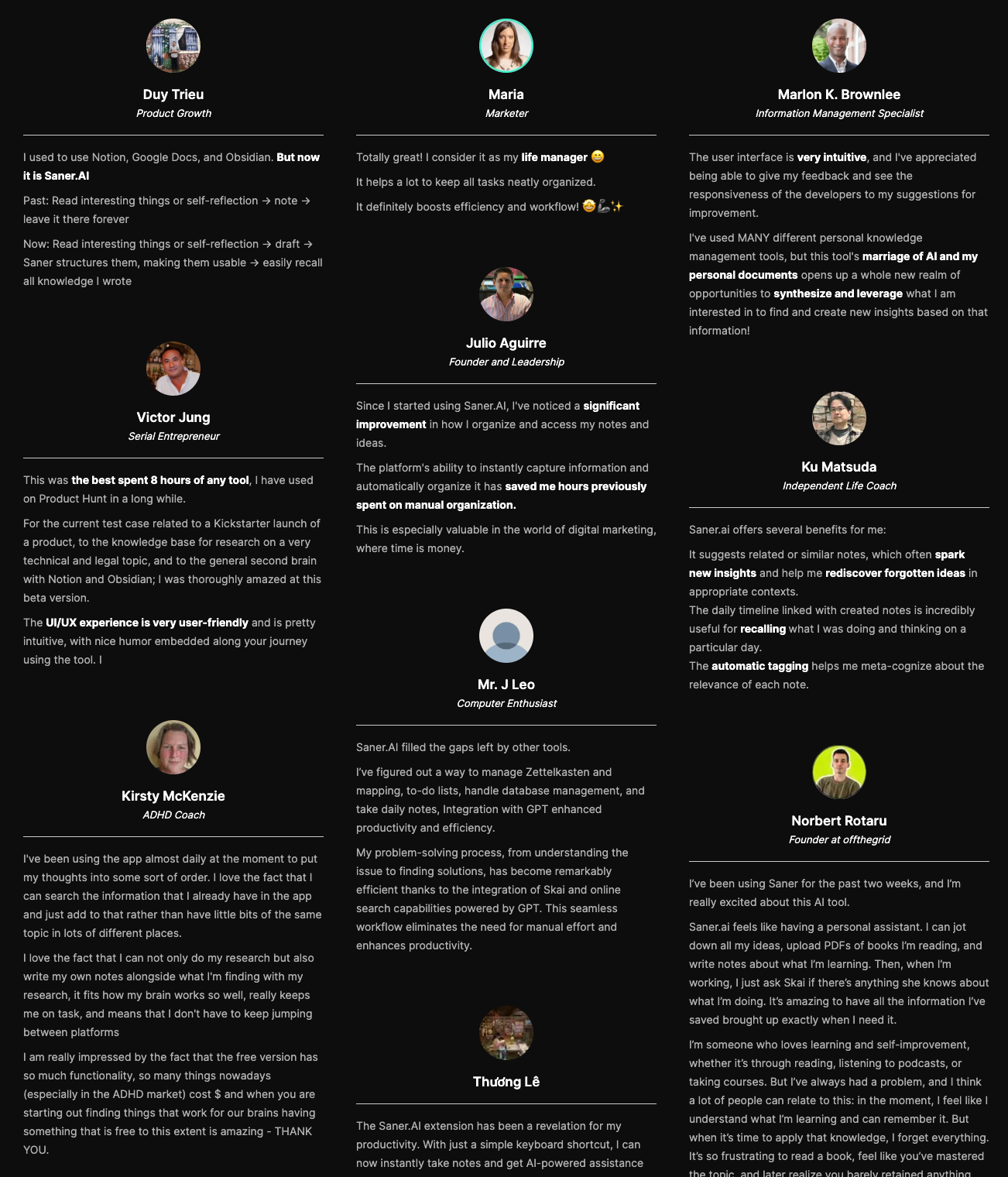
Saner.AI review
How to start using it?
- Go to saner.ai, connect your tools, and start chatting with the AI assistant. It’ll build your plan, help you focus, and make sense of all the chaos.
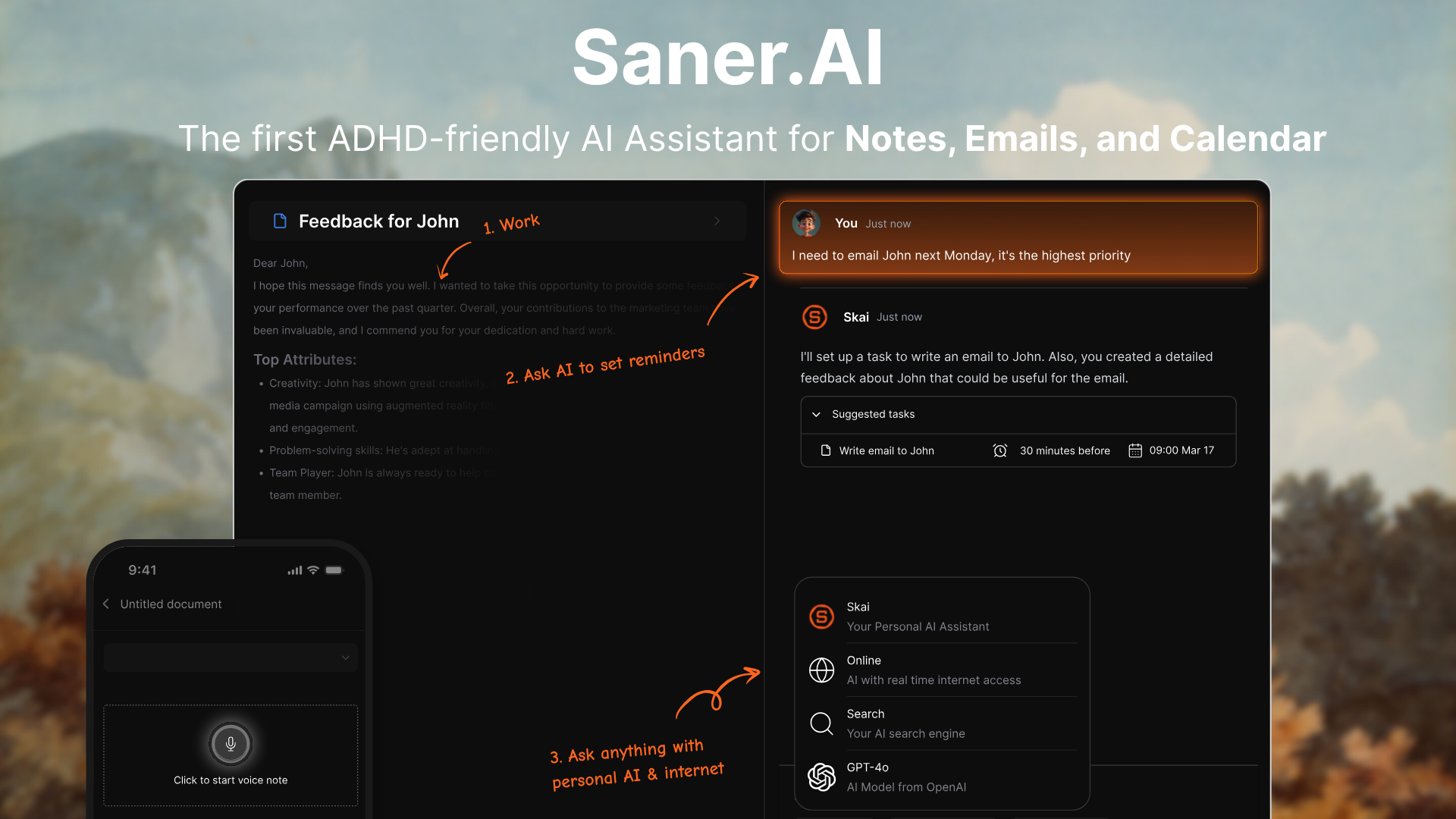
AI Agent that Works Instantly without any setup
Conclusion
Manus gave us a taste of what autonomous AI could be - but it’s no longer the only option.
Whether you're looking for a proactive AI assistant like Saner.AI, a full-stack software building agent like GenSpark, or want to orchestrate multi-agent workflows like OpenClaw, 2026 is already packed with powerful tools that are available, customizable, and getting better every month.
If you want something ready now, easy to onboard, and helps you feel less overwhelmed - not more - then Saner.AI might be your best bet to start.
Stay on top of your work and life
FAQ: Manus Alternative
1. What is a Manus Alternative?
A Manus Alternative is any AI agent or assistant that can plan, reason, and complete real-world tasks - without you micromanaging every step. While Manus.im is known for its hands-off, autonomous approach, it’s still invite-only and limited for many users.
2. Why are people looking for Manus alternatives?
Many users love the idea of autonomous AI agents - but Manus is hard to access, tricky to fine-tune, and not always reliable out of the box.
Alternatives like Saner.AI offer a more practical starting point for:
- Managing real to-dos from messy notes
- Auto-scheduling focus blocks
- Following through on projects
- Reducing decision fatigue with smart nudges
3. Which AI agent is best for daily work planning?
🧠 Saner.AI is a standout if you want to get things done, not just talk.
It combines chat + planning + memory in one calm workspace. It:
- Turns scattered thoughts into prioritized tasks
- Suggests what to do next, based on your context
- Syncs with your calendar and emails
4. Can I use a Manus alternative for task automation?
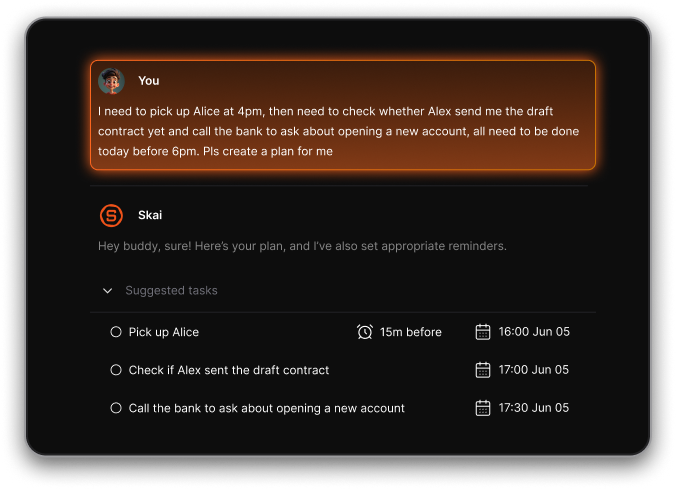
Yes. Tools like Saner.AI and ChatGPT Agents can automatically:
- Create tasks from natural language input
- Remind you based on deadlines or urgency
- Break down big goals into manageable steps
If you want autonomous action, Saner.AI is great for daily productivity; Genspark and Agentspace are better for devs building custom flows.
5. What’s the best Manus alternative for ADHD or overwhelmed users?
🧩 Saner.AI is designed with neurodivergent users in mind. It helps by:
- Minimizing context switching
- Structuring your thoughts into actionable steps
- Nudging you to follow through during the day
It’s perfect if you struggle to juggle notes, ideas, and priorities across multiple tools.
6. Are there free alternatives to Manus?
Yes! You can try these Manus alternatives for free:
- Saner.AI – Free plan includes task capture, natural language search, and calendar sync
7. Which Manus alternative works best for solo founders and remote teams?
Saner.AI helps founders and small teams stay organized without feeling overwhelmed:
- Converts notes and chats into clean, prioritized workflows
- Tracks everything - tasks, notes, deadlines - in one place
- Keeps everyone aligned without manual updates
Great for async teams who want a personal AI assistant that actually understands the work.
8. Can these alternatives help with meetings and follow-ups?
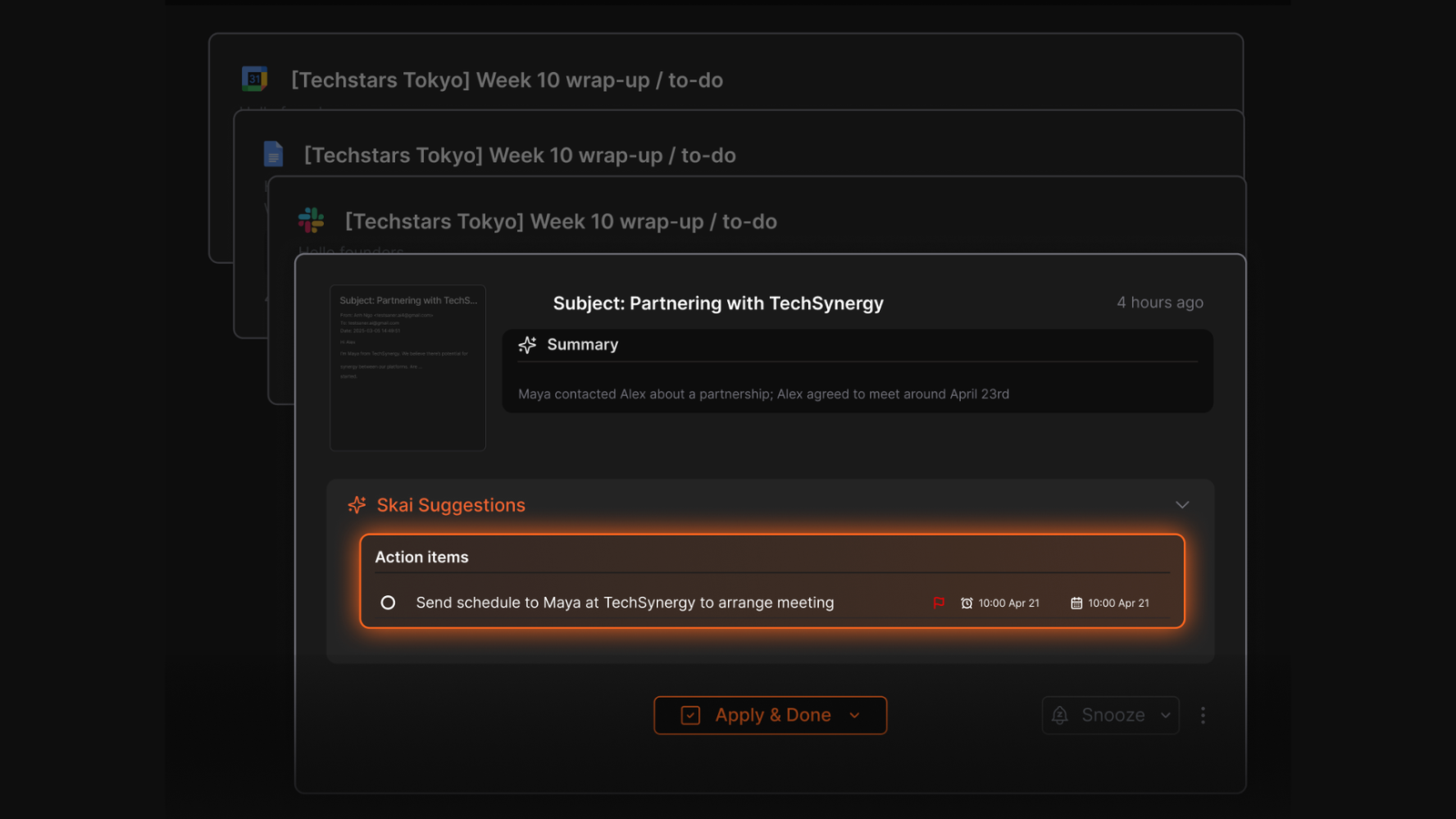
Yes. Tools like Saner.AI are especially useful:
- Pull up notes and action items before a meeting
- Summarize what happened last time
- Remind you to follow up without re-reading emails
With Saner.AI, you can just ask, “What did I miss from last week’s team sync?” and get a full context dump.
9. How is Saner.AI different from Manus?
🆚 While Manus is known for autonomous agents, Saner.AI focuses on context-aware action.
It:
- Understands your notes and turns them into tasks
- Plans your day based on urgency and time
- Checks in throughout the day to keep you on track
Unlike Manus, you don’t need to write prompts or train agents - it just works.
10. Which AI assistant is best for executives or high-stakes work?
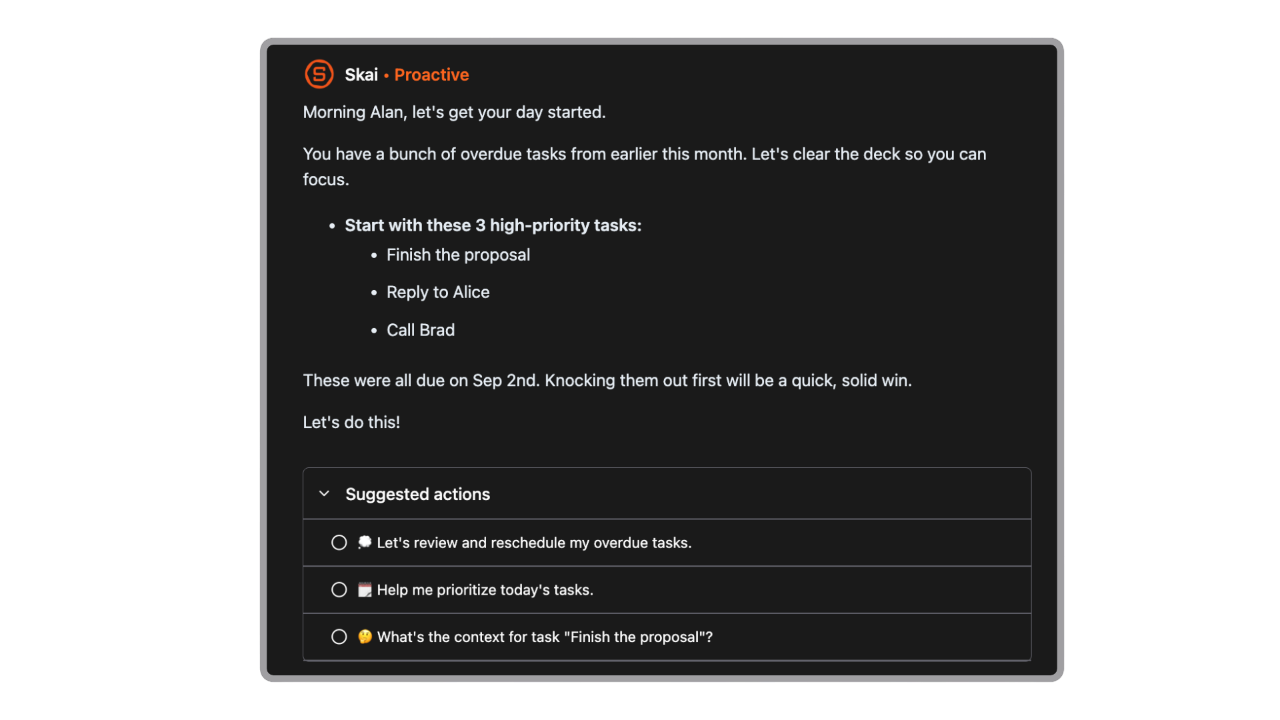
🧠 Saner.AI acts like a personal chief of staff:
- Centralize your meeting notes, tasks, and calendar
- Surfaces follow-ups and priorities automatically
- Helps you act on decisions, not just record them
It’s especially useful if you lead teams and hate fragmented tools.
11. What’s the future of AI agents like Manus and its alternatives?
We’re moving toward proactive, context-aware assistants that don’t just respond - they help you execute.
Expect to see:
- More memory-aware agents (like Claude and ChatGPT Agents)
- Unified workspaces (like Saner.AI)
- Customizable flows (Genspark, OpenClaw)
The best Manus alternative? The one that fits how your brain works.
Get your AI personal assistant without complicated setup