How to stay focused in the digital era


At 18, I got my first smartphone. I was up on the cloud when I got it. Finally, I could watch movies, use Facebook, chat with my friends, or, to be honest, have an escape from awkward situations (not ideally, I know, but what do you expect from an 18-year-old kid).
This was also my first year at university, going to a big city, new people, new environment. My network cycle exploded like 100 times. From my drama club and class group to my bro's group and my party club, they buzzed with activities and messages.
It was also when I created my first IG account and was scrolling constantly on Facebook and YouTube.
At first, I loved it. But soon, something felt off. I didn’t recognize it then, but the constant pinging and buzzing created quiet chaos. I felt like I was always busy, spending hours trying to catch up with the messages in the group, picking up my phone every few minutes just to see Facebook reminding me one of my friends had posted a new image!?
Then came that evening. I had just parked my bike and walked into my dorm room. The moment I flipped on the light, my phone connected to wifi, and gosh, a constant symphony of ping, pong, bang. Messenger groups, Facebook pages, and random apps rang at the same time like a machine gun, causing my old phone to freeze and my brain to feel the same.
“Enough”. I thought, gripping the phone tightly in my hand like it was the source of all the problems, and then…
I still remember vividly me standing by the light switch, without changing my clothes, diving into the phone settings, and furiously turning off all notifications.
Then, Quiet. Silence. It was just me and the calm I desperately wanted
And at that moment in time, that 18-year-old kid realized something powerful: I can choose what deserves my attention.
Over the next few days, I methodically went through my phone. Which notifications were worth keeping? Which groups and pages actually mattered? I decided that my default would be silence—notifications off—until something earned the right to interrupt me.
This approach stays with me through many phone upgrades and app installs: The default status of all distractions is off, until I decide that it is important and turn that on
Rediscovering Focus

Fast forward to today, I’ve been using social media more than I normally do to market Saner.AI. And for me, it’s an odd thing and affects my focus.
Then I came across a podcast on the book I read: Indistractable.
It reminds me, “How we deal with uncomfortable internal triggers determines whether we pursue healthful acts of traction or self-defeating distractions.”
For example, a difficult task makes you uncomfortable. Instead of facing it, you instinctively turn to something easier—like scrolling YouTube or checking Instagram. The more often you do it, the more it becomes a habit.
That hits home. I realized I was using “marketing” as an excuse to avoid the discomfort when doing hard work. Recognizing this pattern gave me clarity. If the task I set out to do in this time frame is really important, there’s no reason I need to check social media in that same moment - it’s definitely a distraction. If checking social media is indeed a task, it should be scheduled in a dedicated time, and there will be no guilt in that period.
Also, in that moment of discomfort, the book mentions a simple 10-minute rule:
Example: If I find myself wanting to check my phone as a pacification device when I can’t think of anything better to do, I tell myself it’s fine to give in, but not right now. I have to wait just ten minutes.
→ “Surfing the urge.” When an urge takes hold, noticing the sensations and riding them like a wave—neither pushing them away nor acting on them—helps us cope until the feelings subside.
A Framework for Focus

So next time you realize you are distracted frequently, do this:
1/ Ask yourself: What task were you trying to avoid? Is this important enough?
2/ Confront the distraction: If it is, then in that discomfort moment, remind yourself It’s okay to feel this way. Just wait a little longer. Or whatever self-talk helps you get through those 10 minutes
3/ Control the environment: If the distractions are notifications, you CAN turn them off. If you are in a situation where you can set the tasks priority for yourself, then silence everything else! If you are not, then aligning the priority with your boss first to know what to focus on and turn off unrelated notifications is a good way.
Conclusion
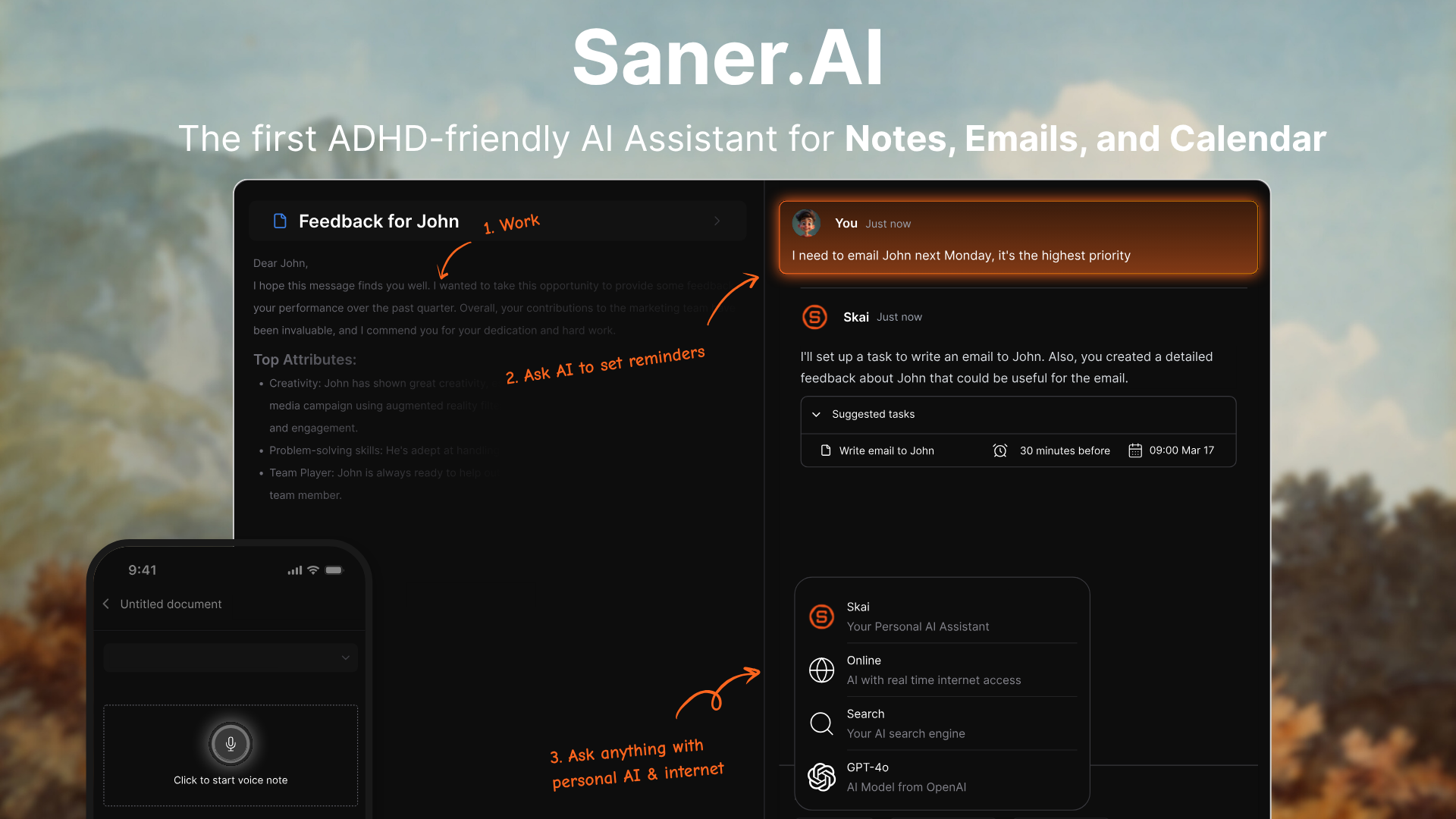
Constant context switching is the enemy of focus. Jumping between tasks creates the perfect storm for distraction. That’s why we designed Saner.AI to streamline your workflow—search the web, write, and ask AI, all in one place.
Your focus matters, cause I believe it sets us apart in this information-overloaded world.
Stay on top of your work and life effortlessly